
Blog · Marketplace · 8-min read
Marketplace Development Blog: 2026 Step-by-Step Guide

Online marketplaces have fundamentally changed how we shop, travel, work, and connect. From finding a ride with Uber to booking a unique stay on Airbnb, these platforms create enormous value by connecting two distinct groups of people. But behind every successful marketplace is a story of careful planning, strategic execution, and overcoming tough challenges.
Welcome to the definitive marketplace development blog. Whether you’re a founder with a fresh idea or an established business looking to build a new platform, this guide will walk you through the entire journey, from validating your concept to achieving massive scale.
Before diving into the nuts and bolts of building, let’s establish a solid foundation. Understanding these core ideas is the first step in any successful marketplace venture.
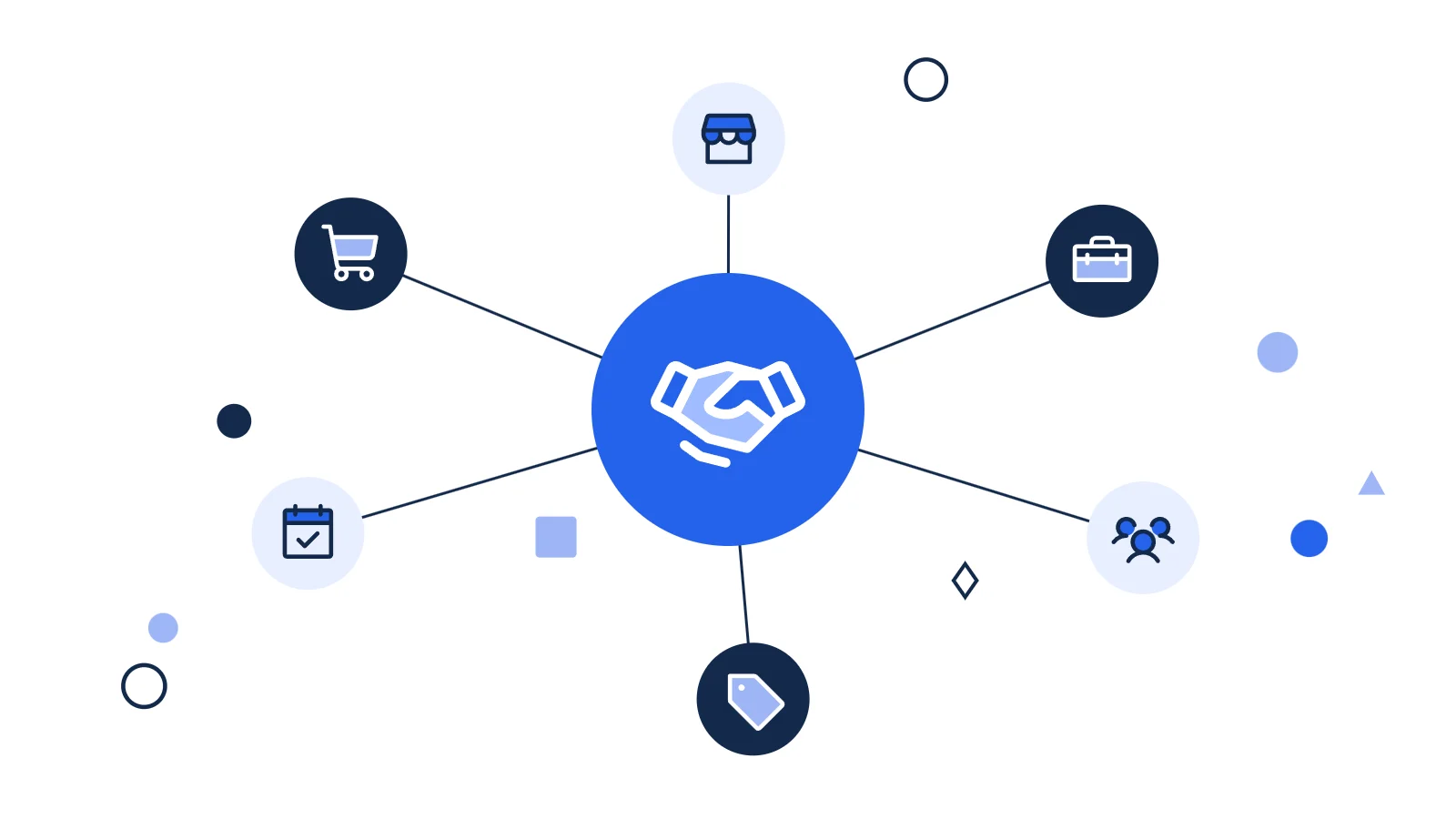
A two sided marketplace is an online platform that connects two different user groups, usually buyers and sellers, so they can transact directly. Unlike a regular online store that owns and sells its own inventory, a marketplace acts as a facilitator. Think of it as a digital matchmaker.
The magic of this model is the network effect: the more sellers who join, the more attractive the platform becomes for buyers, and vice versa. This powerful feedback loop is why marketplaces like Uber and Airbnb can grow exponentially. They don’t own cars or houses; they simply provide the technology and trust that allows millions of transactions to happen. And it’s a lucrative model. For example, Airbnb and Uber generated approximately $12 billion and $52 billion in revenue respectively in 2025.
Marketplaces are everywhere, spanning almost every industry imaginable. Early pioneers like eBay and Craigslist proved the model’s power, and today’s platforms are often highly specialized, for instance, Kidsy focuses on baby and kids gear.
BlaBlaCar: A ridesharing marketplace for long distance carpooling, connecting drivers with empty seats to passengers heading in the same direction. It has grown to 27 million users across 21 countries.
TeachersPayTeachers: A platform where educators can buy and sell original lesson plans and classroom materials. One kindergarten teacher famously earned over $1 million on the platform.
Rover: A niche marketplace connecting pet owners with trusted pet sitters and dog walkers in their local area.
These examples show that whether you’re connecting people for a cross country road trip or for pet care, the fundamental model works. The scale can be enormous, with the top 100 marketplaces estimated at $3.8 trillion in transactions in 2024.
When a marketplace achieves traction, everyone wins. This is a key theme you’ll see in any good marketplace development blog.
For Founders: The model is highly scalable. Since you don’t own the inventory, you can grow rapidly without the massive capital costs of buying and storing goods. This lean approach is very attractive to investors.
For Sellers: Marketplaces provide instant access to a large audience of potential customers, dramatically lowering the barrier to starting a business. The platform handles the tricky parts like payments, booking, and communication, letting sellers focus on what they do best.
For Buyers: Buyers get more choice, better prices, and the convenience of finding everything in one place. They also benefit from the safety and trust the platform provides, like secure payments and user reviews.
A great idea is just the start. A sustainable marketplace needs a solid business model and a smart approach to monetization. This section of our marketplace development blog covers the financial engine of your platform.
A marketplace business model revolves around capturing a small piece of the value it creates. The platform doesn’t sell its own goods but instead provides the infrastructure for others to transact. The most common way marketplaces earn revenue is by taking a commission on each transaction.
In a study of 100 top marketplaces, a commanding 51% used transaction commissions as their primary monetization method. This approach works so well because it aligns the platform’s success with its users’ success. The more business your sellers do, the more revenue you generate.
Beyond a simple commission, there are several ways to generate revenue. This is a critical topic in any marketplace development blog.
Commission Fees: The most popular model. The platform takes a percentage of each sale. Rates vary by industry, from 5 to 15% for physical goods to 15 to 25% for services. Upwork, a freelancing platform, charges around 20% for initial contracts.
Subscription Fees: Users pay a recurring fee for access or premium features. This is common in B2B marketplaces where suppliers pay for access to leads.
Listing Fees: Sellers pay a small fee to post an item, whether it sells or not. Etsy is famous for this, charging $0.20 per listing in addition to its transaction fee.
Lead Generation Fees: In some service marketplaces, the platform charges providers for leads or introductions, even if the final transaction happens offline.
Advertising and Featured Placements: Once you have enough traffic, you can charge sellers to promote their listings for better visibility, just like eBay and Amazon do.
Getting your pricing right is a balancing act. Charge too much, and you risk users leaving. Charge too little, and you can’t build a sustainable business.
Most experts advise starting simple, usually with a straightforward commission. As you grow, you can iterate. Many successful platforms evolve their pricing over time. For example, Upwork introduced a sliding scale commission that decreases as a freelancer bills more with a single client, encouraging long term relationships on the platform. This process of testing, learning, and adjusting your pricing is crucial for long term success. You’re not just looking for product market fit; you’re also searching for revenue model fit. For a B2B example, explore this specialized packaging marketplace case study.
Marketplaces don’t grow like traditional businesses. They are powered by unique forces that can lead to explosive, self sustaining growth once a critical point is reached.
A network effect is when a product or service becomes more valuable as more people use it. For marketplaces, this is the secret sauce. Every new seller adds more selection, making the platform better for buyers. Every new buyer adds more potential sales, making it better for sellers.
This creates a self reinforcing cycle where growth begets more growth. It’s why marketplaces that achieve strong network effects, like Amazon or Etsy, become so dominant and difficult for new competitors to challenge.
Cross side virality is the engine of the network effect in action. It’s when growth on one side of the market directly fuels growth on the other.
Think about Uber. More drivers (supply) mean shorter wait times for riders (demand). Shorter wait times attract more riders. More riders create more earning opportunities, which attracts more drivers. This positive feedback loop (more supply → more value for demand → more demand → more value for supply → more supply) is what creates viral, exponential growth. Managing this loop and keeping the two sides in balance is a core challenge covered in any serious marketplace development blog.
In the marketplace world, liquidity is everything. It’s the measure of how efficiently the platform facilitates transactions. A liquid marketplace is one where sellers can expect to find buyers quickly, and buyers can easily find what they’re looking for.
You can measure liquidity with metrics like the percentage of listings that result in a sale or the average time it takes to get a booking. High liquidity means a great user experience, which leads to high retention and positive word of mouth. It’s often considered the single most important indicator of a marketplace’s health. For example, the gaming marketplace OPSkins achieved what its founders called “coveted liquidity” by facilitating over 2 million purchases per week.
Building a marketplace is notoriously difficult. For every success story, many more fail to get off the ground. This section of our marketplace development blog tackles the biggest challenges you’ll face.
This is the classic marketplace dilemma. Buyers won’t come if there are no sellers, and sellers won’t join if there are no buyers. How do you start?
Solution: Most successful marketplaces solve this by focusing on one side first, usually the supply side. You might manually recruit a core group of sellers before you even launch to the public. For example, Grubhub went neighborhood by neighborhood signing up restaurants before they started marketing to diners.
Leakage happens when users meet on your platform but take future transactions offline to avoid paying your fees. A client and a freelancer, for instance, might decide to work together directly after their first project.
Solution: The best defense is to provide so much value that users want to stay on the platform. This includes services like secure payment processing, integrated scheduling tools, insurance, dispute resolution, and a reputation system (reviews). The more value you bundle into the on platform experience, the less incentive users have to leave.
Users need to trust that they can transact safely with strangers. A single bad experience can damage your reputation and drive users away.
Solution: Building trust starts with fundamentals like user verification, detailed profiles, and a robust, two way review system. In the early days, many founders do things that don’t scale, like manually vetting every new seller to ensure quality. As you grow, you can create a sense of community with forums, educational resources, and clear policies that are fairly enforced.
You’ve validated your idea and understand the theory. Now it’s time to build. This practical section of our marketplace development blog walks you through the early stages of development.
Before you write a single line of code, you must validate your idea. According to one study, 42% of startups fail because of no market need. Prevalidation is the process of de risking your idea by confirming that people actually want what you plan to build.
This involves talking to potential users on both sides of your market. Do they have the problem you think they do? How are they solving it now? Would they pay for a better solution? Finding this problem solution fit is the crucial first step. You can use interviews, surveys, or even a simple landing page with a signup form to test interest.
Don’t try to be everything to everyone at launch. The most successful marketplaces started with a very narrow focus.
Amazon started by only selling books.
Uber launched exclusively as a black car service in San Francisco.
By focusing on a specific geographic area (one city), a single category (just camera rentals), or a niche audience (college students), you can concentrate your users. This makes it much easier to achieve liquidity and create a great early user experience. It’s better to be deeply loved by a few than just liked by many. Win a small, focused market first, then expand.
An MVP, or Minimum Viable Product, is the most basic version of your platform that still allows users to complete a core transaction. The goal isn’t perfection; it’s learning. You want to test your core assumptions with real users as quickly and cheaply as possible.
There are two main paths for your MVP:
No Code Marketplace Builders: Tools like Sharetribe allow you to launch a functional marketplace in days or weeks without coding. This is a fantastic way to test your idea with minimal upfront investment. See how the RareWaters marketplace migration to Sharetribe enabled advanced features like season passes and custom pricing.
Custom Development: If your concept has unique features that no code tools can’t handle, you’ll need a custom build. This offers maximum flexibility but requires more time and capital. See how Cuboh (YC S19) built deep third party integrations to unify restaurant orders across delivery apps.
Choosing the right path depends on your specific needs and budget. An experienced development partner can help you decide. For those looking to build a robust MVP quickly, Horizon Labs offers a specialized 6 to 12 week MVP program to get your marketplace into the hands of users faster.
A smooth and secure payment system is non negotiable. It’s essential for building trust and preventing leakage. Setting up marketplace payments is more complex than a standard ecommerce site because you need to handle payouts to multiple sellers, manage commissions, process refunds, and deal with compliance. Solutions like Stripe Connect are designed specifically for marketplaces, but integrating them properly requires expertise. For example, Patcom Medical implemented identity verification, rewards, and nuanced commission logic on its healthcare training marketplace.
You’ve built your MVP and are ready to go live. The journey is just beginning. Growth requires a deliberate launch strategy and a relentless focus on scaling what works. This phase is often the most exciting part of the journey detailed in a marketplace development blog.
Your first priority is getting quality supply on the platform. In the early days, this is almost always a manual process. You’ll need to personally recruit your first sellers, help them create great listings, and teach them how to succeed on your platform.
High touch, manual onboarding was a key strategy for companies like Airbnb and Lyft. Airbnb’s founders famously went door to door taking professional photos for their first hosts to ensure listings were appealing. This manual effort ensures your first buyers have a fantastic experience, which generates crucial early momentum.
A successful launch is about igniting the network effect in a controlled way. Don’t launch everywhere at once.
Pick a Niche Market: Start in one city or a single vertical where you can win.
Seed the Supply: Onboard your initial sellers before you start marketing to buyers.
Attract Initial Demand: Use targeted marketing, PR, and promotions to bring in your first buyers.
Balance and Monitor: Watch your liquidity metrics closely and adjust your efforts to keep supply and demand in balance.
Once you’ve created a successful playbook in your first market, you can replicate it as you expand. A methodical, phased rollout is a core part of a sound scalability strategy. Launching a marketplace requires a unique game plan, and getting guidance from a team like Horizon Labs, which has launched dozens of platforms, can make all the difference.
After launch, your focus shifts to finding product market fit. This is the point where you’ve built a product that is so valuable to a well defined market that it starts to grow organically through word of mouth. Your retention rates will be high, and users will be actively engaged.
Once you have product market fit in your initial niche, your scalability strategy comes into play. This is your plan for expansion. Will you expand city by city, like Uber? Or will you add adjacent product categories, like Amazon? Your scaling strategy should be a deliberate, data driven process of replicating your initial success in new markets. For an example of strengthening infrastructure to support rapid growth, see our Arketa (YC S20) case study.
Liquidity is by far the most important metric. It measures the probability of a seller making a sale or a buyer finding what they need. Without liquidity, your marketplace will feel empty, and users won’t stick around. It’s the clearest sign that your core value proposition is working.
The very first step is idea prevalidation. Before you think about technology or design, you must confirm that there is a real market need for your idea. Talk to potential users on both sides of the market to validate that you are solving a genuine problem for them. This is a core focus of any practical marketplace development blog.
It depends on your concept’s complexity. A no code builder like Sharetribe is excellent for quickly and affordably testing standard marketplace models (e.g., rentals, services, products). If your idea requires a unique workflow, complex pricing logic, or specific integrations that no code platforms don’t support, custom development is the better path.
The most common solution is to focus on building up the supply side first. You can do this by manually recruiting sellers, offering them incentives to join, or even populating the initial listings yourself. Once you have a critical mass of quality supply, you can then focus your marketing efforts on attracting buyers.
The cost can vary dramatically. A simple MVP using a no code tool might cost a few thousand dollars to set up and run. A custom developed marketplace MVP can range from $10,000 to over $100,000, depending on its complexity. At Horizon Labs, we specialize in building MVPs with clear, predictable budgets: most run $5,000 to $30,000.
A focused launch (e.g., in one city or one product category) allows you to concentrate your resources and users. This density makes it much easier to achieve liquidity and create a great user experience. It’s better to dominate a small market and create passionate early adopters than to be thinly spread and irrelevant across a large market.
Discover what Clutch.co is, how its verified B2B reviews and agency rankings work, and how startups can use it to find reliable software development partners.
Design a dispute-resolution control plane with case states, evidence, roles, financial actions, reconciliation, appeals, and operator-ready metrics.

Discover if Sharetribe is the best fit for your marketplace. Compare ST vs Cocorico, explore alternatives, and answer 10 crucial questions before you decide.
Tell us what you're building. After an intro call with our founders, you'll hear back within 72 business hours: a written scope with an hour range and a hard ceiling, or the questions we need answered first.