
Blog · Payments · 15-min read
How marketplace payouts work: Ledger, holds, failures, and reconciliation
Last substantive review: August 2026.
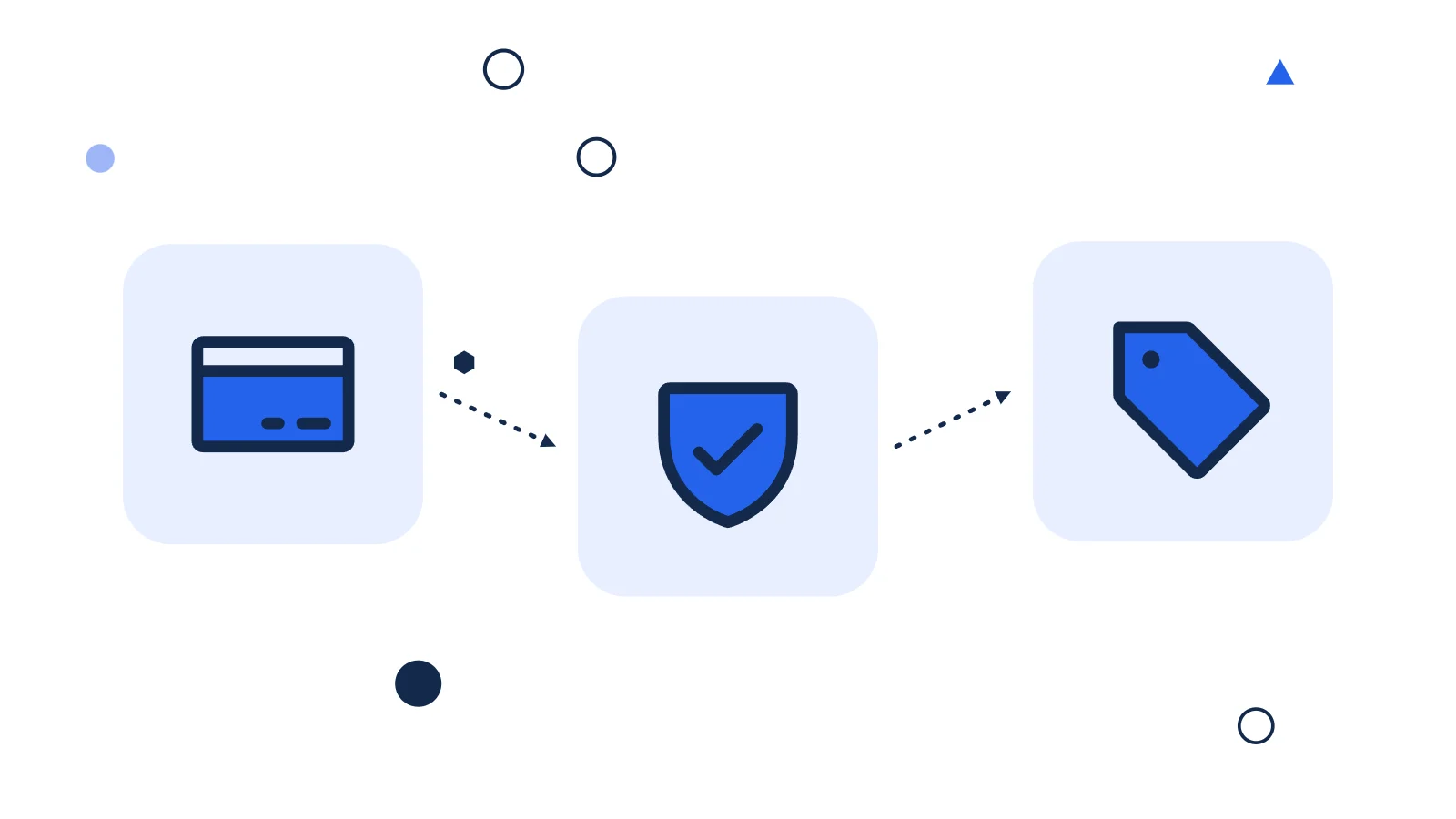
A marketplace payout is not simply “send the seller the order total.” It is the final execution step in a longer control system: a buyer pays, the marketplace records who is owed what, risk and policy rules determine when that amount becomes eligible, a payment provider submits money to an external account, and several records must agree afterward. When those stages are collapsed into one balance field, payout bugs become finance and support incidents.
This guide explains that lifecycle without assuming one provider or one marketplace model. Provider APIs supply payment and transfer primitives. The marketplace still owns its commercial rules, internal ledger, eligibility decisions, operator controls, and evidence that the right amount reached the right destination. Provider-specific behavior below is an example to verify against your account configuration, not a universal rule.
The topic here is payout control and reconciliation. Choosing a payment provider is a separate architecture decision. Resolving an individual buyer-seller disagreement belongs in a purpose-built marketplace dispute admin workflow. Keeping those concerns separate makes each one easier to reason about.
A useful design starts with explicit stages. Each stage has its own source of truth, transition conditions, and failure modes.
| Stage | What the marketplace should know | Typical control |
|---|---|---|
| Buyer charge | Authorization, capture, currency, fees, refunds, and provider identifiers | Idempotent payment commands and event ingestion |
| Internal allocation | Gross amount, platform fee, seller payable, tax or other withholding, adjustments | Append-only ledger entries |
| Reserve or hold | Amount restricted, reason, owner, release rule, and release time | Explicit sub-balances rather than an unexplained subtraction |
| Eligibility | Whether a seller amount may enter a payout batch now | Versioned policy evaluation against durable facts |
| Payout command | Amount, currency, destination, cohort, authorization, idempotency key | Durable command record before an external request |
| Provider submission | Provider payout or transfer object and changing status | Webhook ingestion plus scheduled API verification |
| Failure or return | Reason, recoverability, corrected destination, and financial effect | Compensating entries and controlled retry |
| Reconciliation | Agreement among orders, ledger, provider records, payout batches, and bank evidence | Exception queues with owners and aging |
The arrows are not all one-way. A refund can arrive after funds were made eligible. A bank can return a transfer after a provider marked it booked. A seller can become restricted between batch creation and submission. The architecture has to model late facts without rewriting history.
Three amounts are commonly mistaken for the same balance:
These values may coincide in a simple transaction, but they answer different questions. A captured charge may still be pending at the provider. Available provider funds may include proceeds from many sellers. A seller may be contractually owed an amount that is temporarily reserved, or the platform may have provider liquidity that is not owed to that seller at all.
Stripe, for example, documents separate pending and available balances for platform and connected accounts. “Available” means that balance can currently be used for actions such as a payout under the configured flow. It does not calculate the marketplace’s obligations to a particular seller. Other providers expose different balance concepts. Treat their fields as external financial facts, not as your entitlement ledger.
A clear operator interface should show separate values for accrued seller payable, reserved, eligible now, submitted, in transit, paid, returned, and negative or under recovery. A single “seller balance” hides the distinction precisely when an operator needs it most.
The payout system needs a durable record of why every amount exists. For each posted financial event, not merely each order, record balanced entries for captured funds and clearing, marketplace revenue or fees, seller payable, refunds, disputes, adjustments, reserves, and provider fees according to the marketplace’s accounting policy. The exact chart depends on the marketplace’s accounting model; the engineering principle is stable: entries are immutable, attributable, and connected to business and provider objects.
Do not edit an old row when a refund, fee correction, or manual adjustment arrives. Add a compensating entry with the actor or system source, timestamp, reason, currency, and links to the original entry. This preserves the sequence an operator, accountant, or engineer needs to reconstruct the balance.
Ledger invariants should be executable checks, not prose in a runbook. Examples include:
Teams migrating an existing marketplace can first create a shadow ledger. Populate it from orders and provider events, compare calculated balances against current operations, and investigate gaps before it is allowed to authorize money movement. The webhook and API reconciliation pattern is useful here because historical imports and live events overlap during a cutover.
A reserve is not a mysterious reduction to “available.” Store the amount, currency, seller, related transaction or cohort, policy version, reason, creation time, release condition, and current state. If a rolling reserve applies, each contribution and release should be traceable. If an operator places a manual hold, require a reason and record who can release it.
Different restrictions serve different purposes. A transaction hold may wait for fulfillment evidence. A time-based delay may cover a return window. A seller-level reserve may absorb future refunds. A compliance or provider restriction may block all payout commands. Combining them into one boolean makes it impossible to explain why money is unavailable or when it should release.
The release path deserves the same rigor as the hold path. Run it from durable rules, make it idempotent, and log the exact entries moved from reserved to eligible. A nightly job that blindly clears dates can release funds even though a seller’s status changed earlier in the day. Re-evaluate the relevant conditions at release time.
An eligibility engine answers: “Which specific ledger entries may be included in a payout command now?” Its inputs normally include provider settlement state, seller verification and payout capability, fulfillment or service-completion evidence, refund and dispute exposure, reserve policy, negative balance, currency, minimum payout threshold, destination status, and manual review flags.
Use a versioned policy and store the evaluation result alongside the facts that produced it. If rules change next month, the team should still be able to explain why yesterday’s payout was allowed. Avoid a long chain of scattered conditionals in a scheduled job; it is difficult to test and almost impossible to audit.
Eligibility timing is business-specific. A marketplace for shipped goods, professional services, rentals, and digital delivery will not use the same fulfillment evidence or delay. Provider contracts and capabilities also differ by country, account configuration, and money flow. Legal and finance counsel should confirm regulated roles and contractual obligations; application code should not invent them.
A provider request must be the consequence of an internal command, not the only record that a scheduled job tried to pay someone. Create the command transactionally with its seller, source entries, amount, currency, destination reference, policy evaluation, approver if required, and a stable idempotency key. Lock or mark the source entries so another worker cannot allocate them again.
Then submit the request. If the network times out, persist the attempt and use provider-supported lookup or reconciliation to determine whether an object was created. Retry with the same key only within the provider’s documented idempotency-retention and parameter-matching rules; once that window is uncertain, reconcile before issuing any new command. Stripe’s idempotency documentation is one provider-specific example of this retry control. The same system-level principle applies even when another provider names the mechanism differently.
Separate command authorization from execution for consequential or unusual payouts. A policy can require a second approval above a marketplace-defined threshold, for a changed destination, or after a long account restriction. The UI should show what the approver is authorizing, including source entries and any warning, rather than presenting a generic “approve payout” button.
Submission is not settlement. Model states such as created, submitted, pending, in transit, paid, failed, canceled, returned, and needs review, adapting them to the provider and bank rail in use. Store raw provider status separately from your normalized state so you can reprocess events when mapping logic changes.
Stripe currently documents payout states including pending, in transit, paid, canceled, and failed, and notes that some failures can be reported after an initial paid state. Adyen’s payout lifecycle includes stages such as initiated, authorized, booked, failed, credited, and returned; its documentation explicitly warns that booked is not necessarily final. These examples are why a platform should not close its internal payout merely because the first success-looking webhook arrived.
Webhook handlers should verify authenticity, deduplicate by event or object version, tolerate out-of-order delivery, and update the state transactionally. A scheduled verifier should query stale or consequential payouts even if no webhook appears missing. Webhooks provide speed; reconciliation provides confidence.
A failed submission and a later bank return are different events. Classify reasons into actionable categories: invalid or closed destination, verification restriction, insufficient platform or connected-account balance, unsupported currency or rail, provider outage, and unknown. Preserve the provider code, but translate it into an operator action.
When money returns, create compensating ledger entries that restore the appropriate payable, reserve, or recovery balance. Do not delete the original payout. Require destination remediation or review before another attempt, and generate a new command linked to the old one. Automatic retry is appropriate only when the failure is known to be transient and the provider’s semantics are understood.
A negative seller position can arise from refunds, disputes, fees, or corrections after earnings were paid. The marketplace needs a written recovery policy reflected in code: block new payouts, offset future earnings, draw from an explicit reserve, fund the deficit at platform level, or use an account debit only where the provider setup, contract, and applicable rules allow it. Provider behavior varies. Stripe, for example, documents that liability and balance behavior depend on the Connect configuration, and that some transfers that fail for insufficient balance are not retried automatically.
Never silently net a negative amount against another seller. Keep ownership and currency explicit, and expose aged recovery items to finance and operations.
Reconciliation is not one equality check. Mature marketplaces compare four layers:
Timing differences are normal, but they must be named. A reconciler should distinguish “expected but not yet available,” “submitted but not yet settled,” “returned,” “amount mismatch,” “missing provider object,” and “unmapped provider transaction.” Each exception needs an owner, age, next action, and evidence. A spreadsheet can help investigate an incident; it should not become the only durable mapping between orders and payouts.
Provider reports help, but their scope differs. Stripe’s payout reconciliation report groups balance activity associated with automatic payouts. Adyen describes reconciling internal records with transfer and bank data using reports and webhooks. Use the reports your configuration actually produces, and document where your platform must supply the remaining relationship.
Operators need a seller-centered timeline that combines ledger facts, eligibility evaluations, holds, commands, provider events, and reconciliation exceptions. Show separate queues for eligible but unsent amounts, commands awaiting approval, provider-pending payouts, stale in-transit payouts, failures, returns, and negative balances. Filter by currency, destination, cohort, provider, and age.
High-risk actions should be narrow and reversible where possible. A user may place or release a hold, cancel an unsubmitted command, approve a retry, link an unmatched provider record, or post a reviewed adjustment. Every action records actor, time, reason, prior state, resulting state, and affected financial identifiers. Broad “fix balance” controls create another reconciliation problem.
Useful operating measures include the amount and age of the eligibility backlog, time from eligibility to submission and from submission to terminal status, failure and return rate by reason, unmatched ledger-to-provider records, stale commands, manual-adjustment volume, and reserve exposure. Set targets from your own rail, geography, policy, and historical distribution. Universal payout-speed benchmarks hide the risk and operational choices that created them.
This sequence favors explainability over a one-time migration event. It also gives the marketplace a practical rollback: stop creating new payout commands while event ingestion and reconciliation continue.
Payout backlogs rarely sit in one file. They cross order models, provider APIs, asynchronous workers, data repair, admin permissions, accounting exports, and on-call operations. Senior help is most useful when the team cannot prove balances, duplicate execution is possible, a provider migration left two partial histories, or operators depend on manual fixes nobody can safely replay.
Horizon Labs’ full-stack lane is typically $100–120 per hour for marketplace and payment work that requires this depth. The engagement can begin with a bounded payout-control audit: reconstruct one cohort, test ledger invariants, classify exceptions, and deliver an implementation sequence. It can then extend into backlog clearance with the client team rather than becoming an indefinite rewrite.
Horizon Labs worked with the RareWaters Sharetribe marketplace from its first day of operations through its acquisition. That is continuity evidence, not a claim that Horizon built RareWaters’ payout system or caused the acquisition. For broader marketplace engineering patterns, see the guide to hard marketplace problems.
If payout operations are hard to explain or a backlog is blocking growth, contact Horizon Labs with one example seller, order, and payout. We can scope the smallest investigation that proves where the system diverges before anyone moves more money.
A payment is the buyer-facing flow in which funds may first be authorized and later captured for an order; authorization alone does not complete the movement of funds. A payout is the later movement from a provider or platform balance to a seller’s external account. The platform ledger connects them, but they are separate objects with separate timing, fees, failure modes, and reconciliation.
A provider’s available balance describes liquidity the provider currently permits an account to use for payouts. Seller entitlement is the marketplace’s contractual and accounting calculation after fees, refunds, reserves, adjustments, and policy rules. Neither value proves the other, so the platform must calculate entitlement and reconcile it to provider records.
Eligibility should follow an explicit policy evaluated from durable facts: payment settlement state, seller verification and capabilities, fulfillment evidence, refund or dispute exposure, reserve rules, negative balance, currency and minimum thresholds, and any manual review. The correct delay depends on the business model, provider configuration, contracts, and jurisdiction.
Keep the payout in a durable state machine, record every provider event idempotently, classify the failure or return reason, restore or quarantine the amount with compensating ledger entries, and require the right remediation before retrying. Do not treat submission, booking, or an early paid status as irrevocable completion.
Reconcile orders, refunds, fees, and adjustments to the internal ledger; reconcile that ledger to provider balance transactions and payout batches; then reconcile payout status and returns to the receiving rail or bank records available to the platform. Exceptions need owners, aging, evidence, and an auditable resolution.
Provider behavior and framework capabilities change. These primary sources were checked for this review:

A production Stripe Connect guide to account configuration, charge topology, onboarding, webhooks, reconciliation, testing, migration, and rollout.

Understand what marketplace payment solutions are, how split payouts and KYC work, and how to choose Stripe Connect vs. alternatives. Avoid pitfalls, start here.
Your 2026 guide to managing refunds, chargebacks, and disputes with Stripe Connect: liability by charge/account type, key fees, and prevention steps. See how.
Tell us what you're building. After an intro call with our founders, you'll hear back within 72 business hours: a written scope with an hour range and a hard ceiling, or the questions we need answered first.