
No scope creep. No surprise invoices.
Most agencies quote low, then bill the difference. We do the opposite. Every contract states an hour range; past the maximum, we finish the agreed scope at no extra cost. Fixed-price projects are paid in installments tied to delivery, with the warranty in writing.
The process, step by step
Week 0
01 · Intro call
A 30-minute call with someone who can actually scope your project, not a sales rep. Bring your idea, your codebase, or your backlog. If we're not the right fit, we'll tell you on this call and point you somewhere better.
Within 72 business hours of the call
02 · Free scoping & written estimate
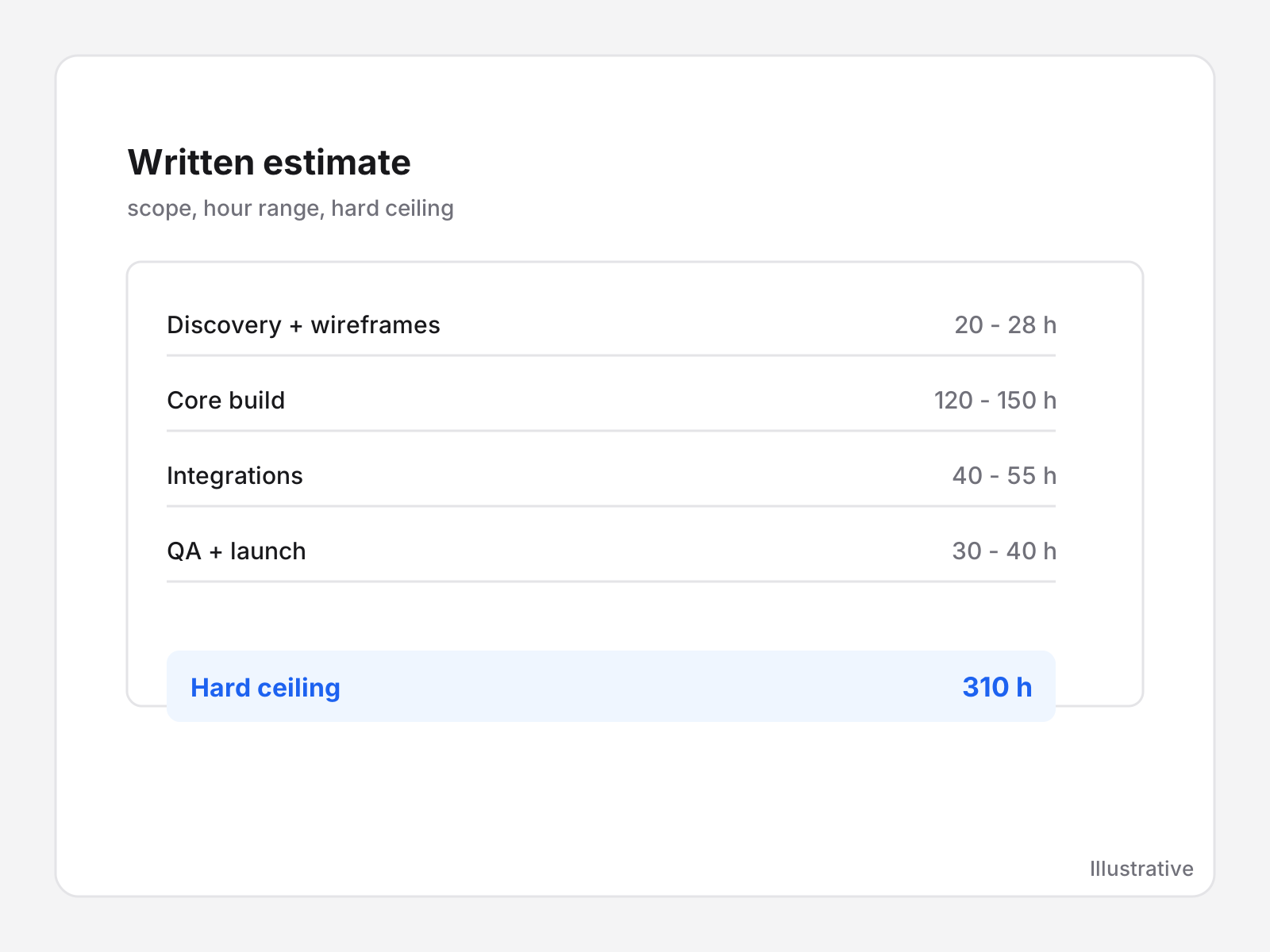
We map your screens, workflows, and edge cases, then send a written estimate: scope, an hour range, and a hard ceiling. Already have a codebase? We review it free and tell you honestly whether we can work with it.
Week 1
03 · Contract
You contract directly with our US company. The contract lists milestones, deadlines, and the hour range. The maximum in that range is the most you'll ever pay for the agreed scope; if we go over, the overage is on us.
The day after signing
04 · Sprints
Work runs in two-week sprints. Kickoff is usually the day after you sign. You see working software every single week while it grows.
Launch
05 · Launch
Documented, security-reviewed, and SEO-ready. You own every line of code in your own GitHub org.
6 months after
06 · Warranty
If anything we delivered breaks, we fix it free. No ticket triage games, no "that's out of scope."
What working with us actually looks like.
It comes down to three things: cadence (how we communicate), access (what you can see and touch), and estimation (how we price).
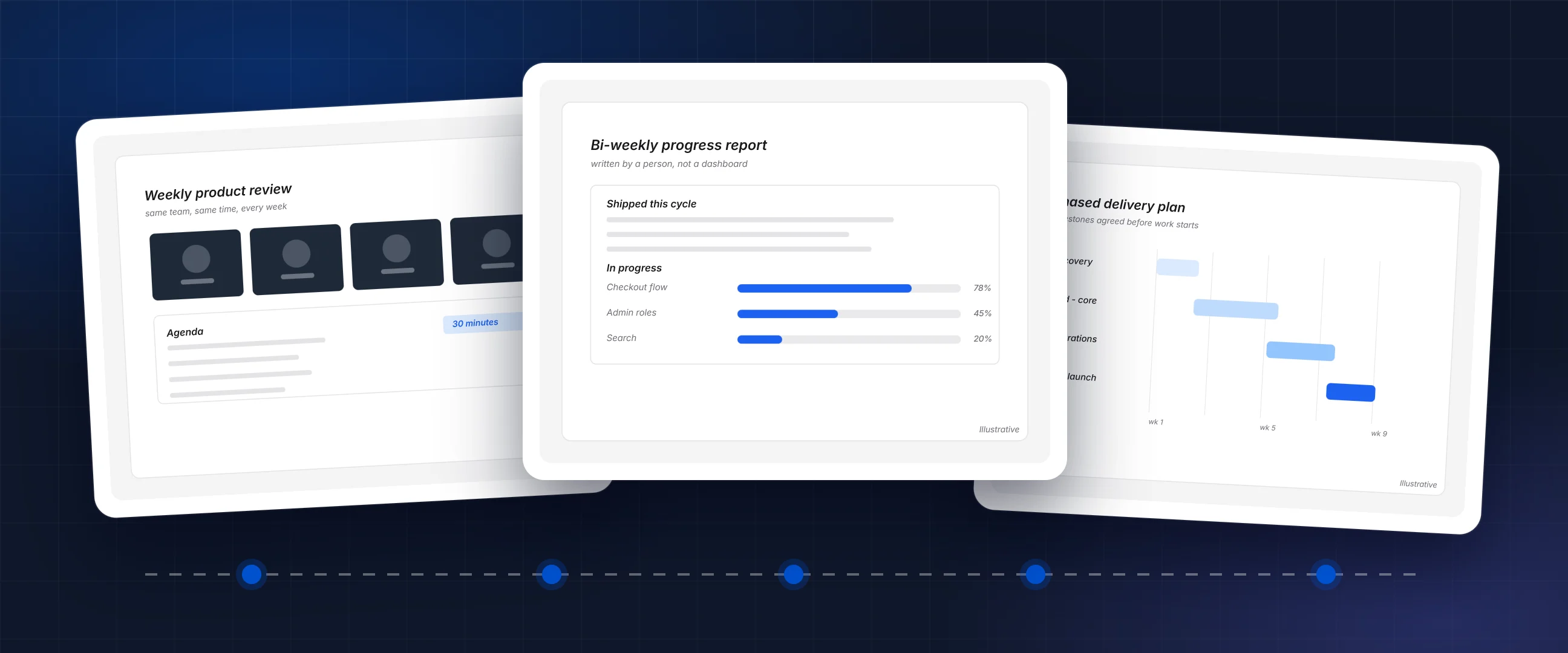
Weekly review call
Every week we open the live app and click through it together while we take notes. The product itself is the status report.
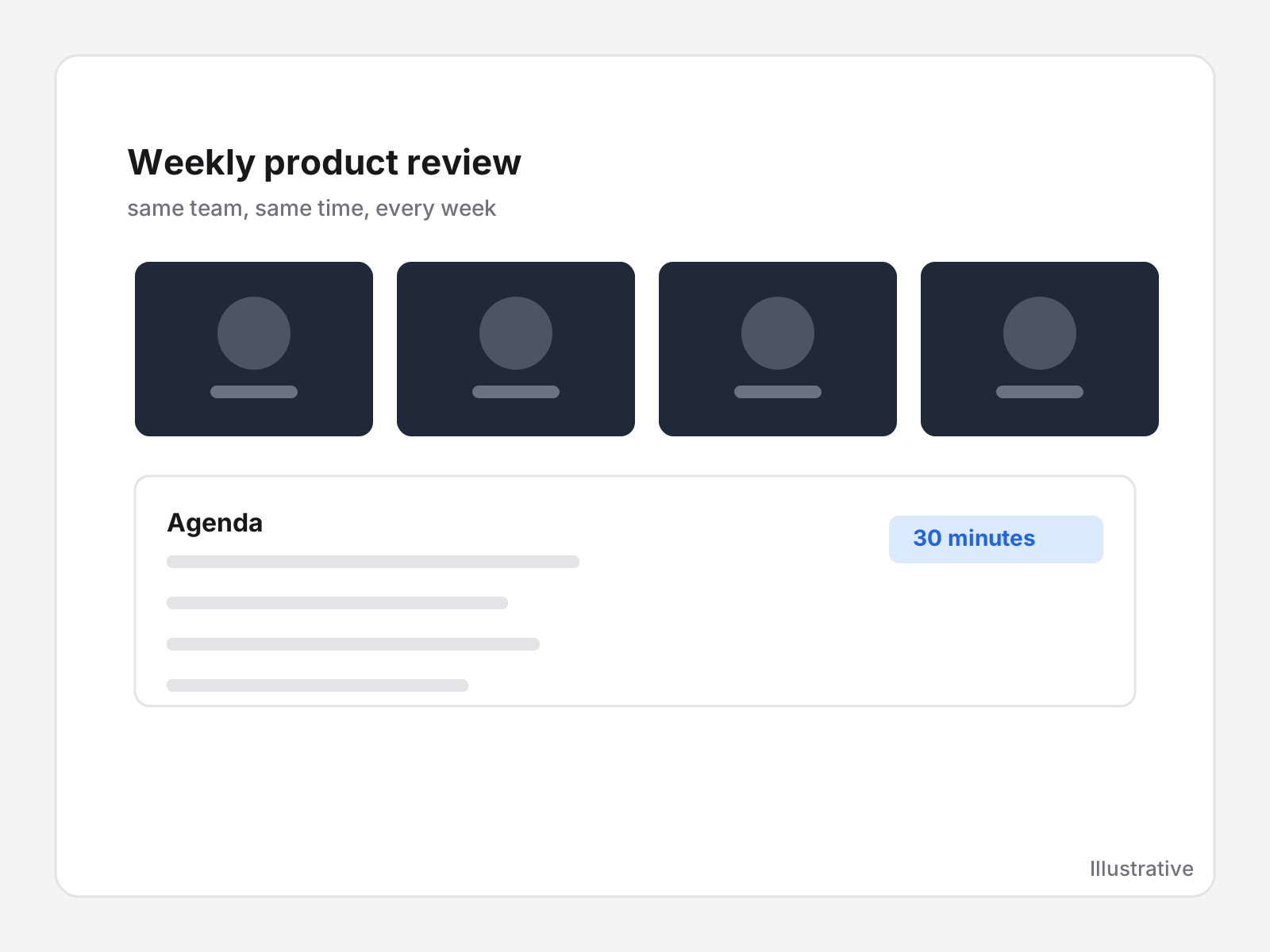
Reports a human wrote
Bi-weekly progress reports and monthly financial reports, prepared personally by your delivery lead: what shipped, what's next, and where the budget stands.
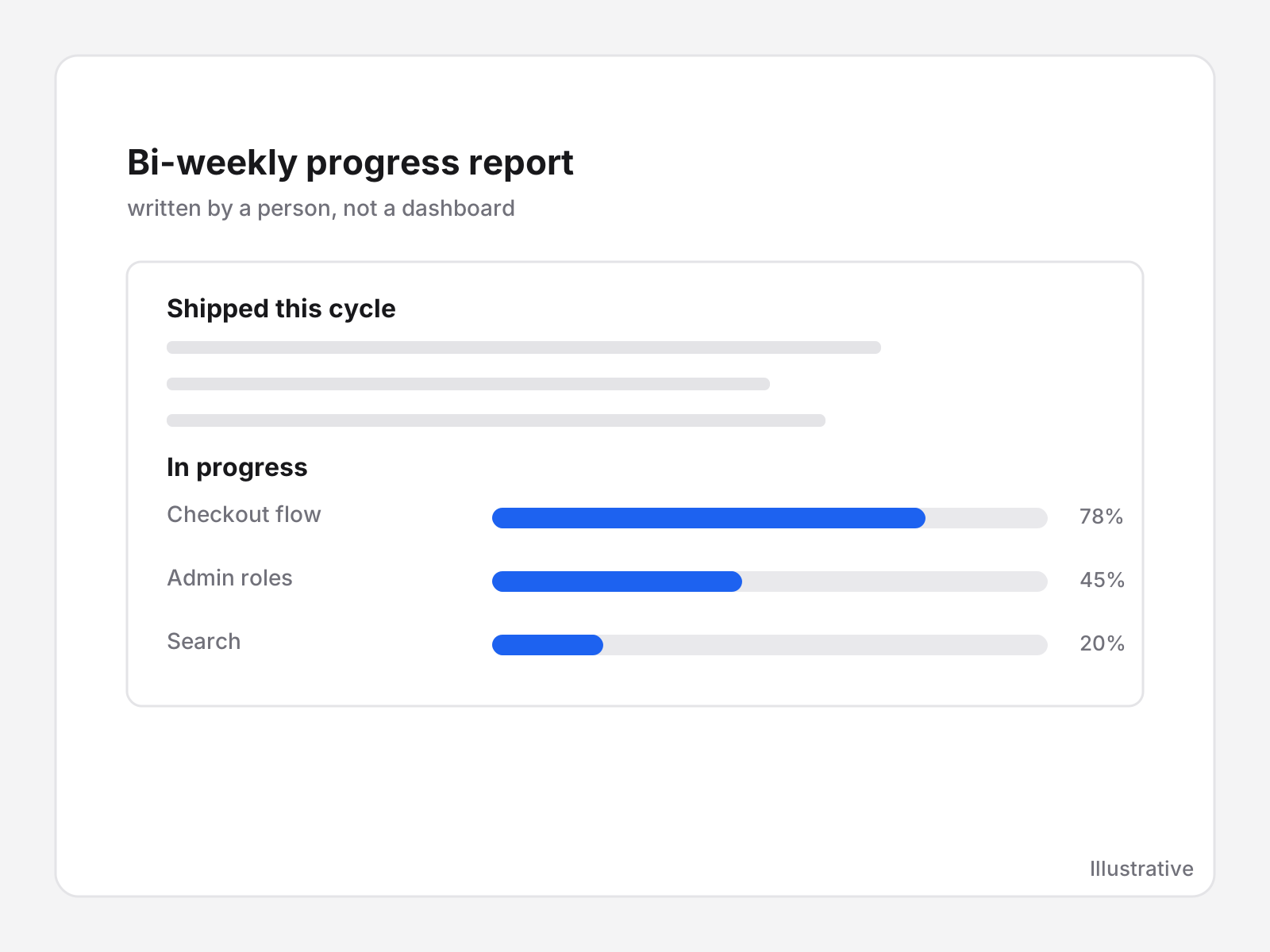
US hours
Our teams overlap 6am–6pm Pacific, whether your engineers are onshore in the US or nearshore in Türkiye. US management on every project.
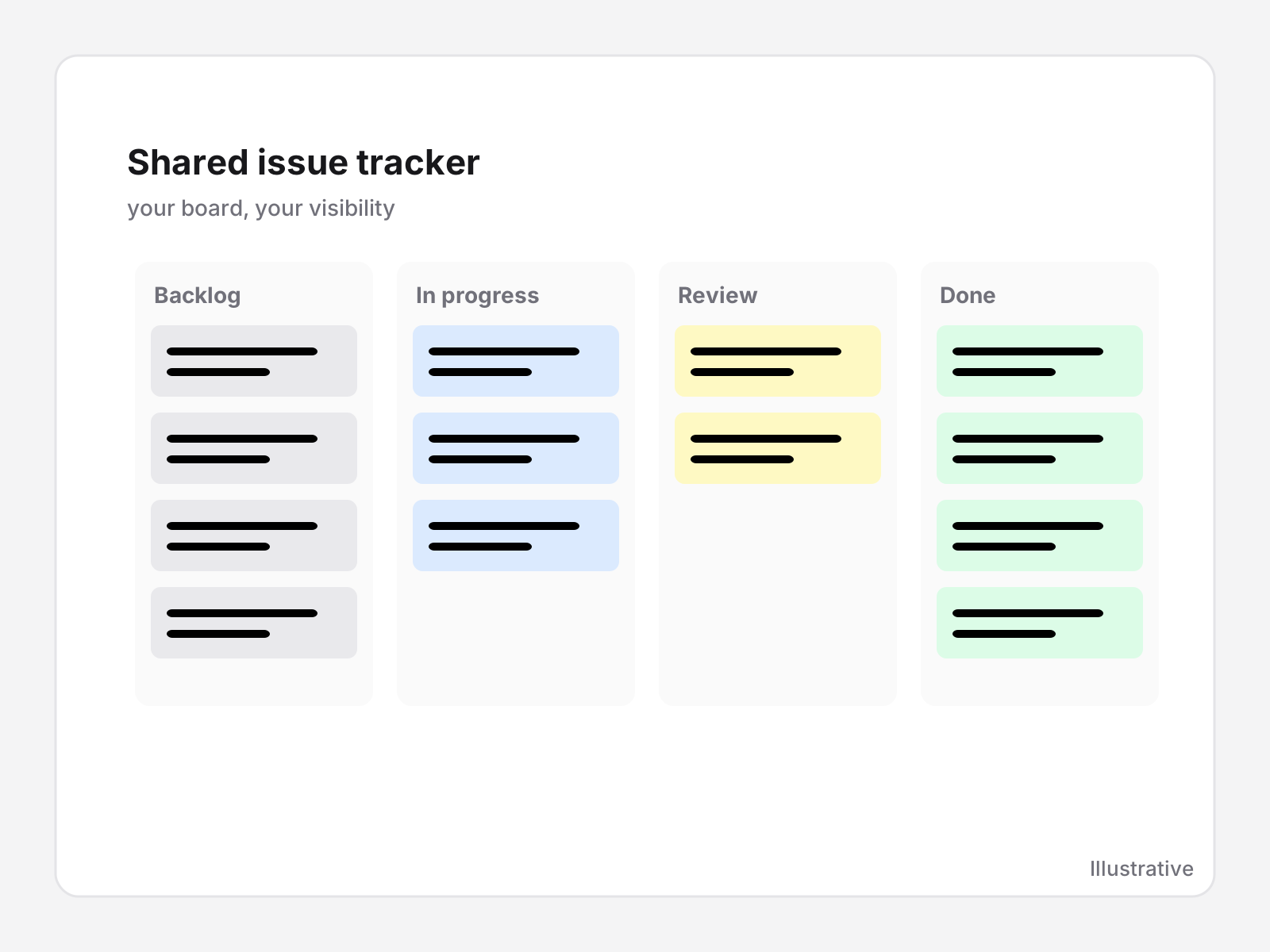
A shared issue tracker
Every request, bug, and idea lives in one tracker you can see. "In progress" means we're on it; "resolved" means it's live in production, often within hours of the fix.
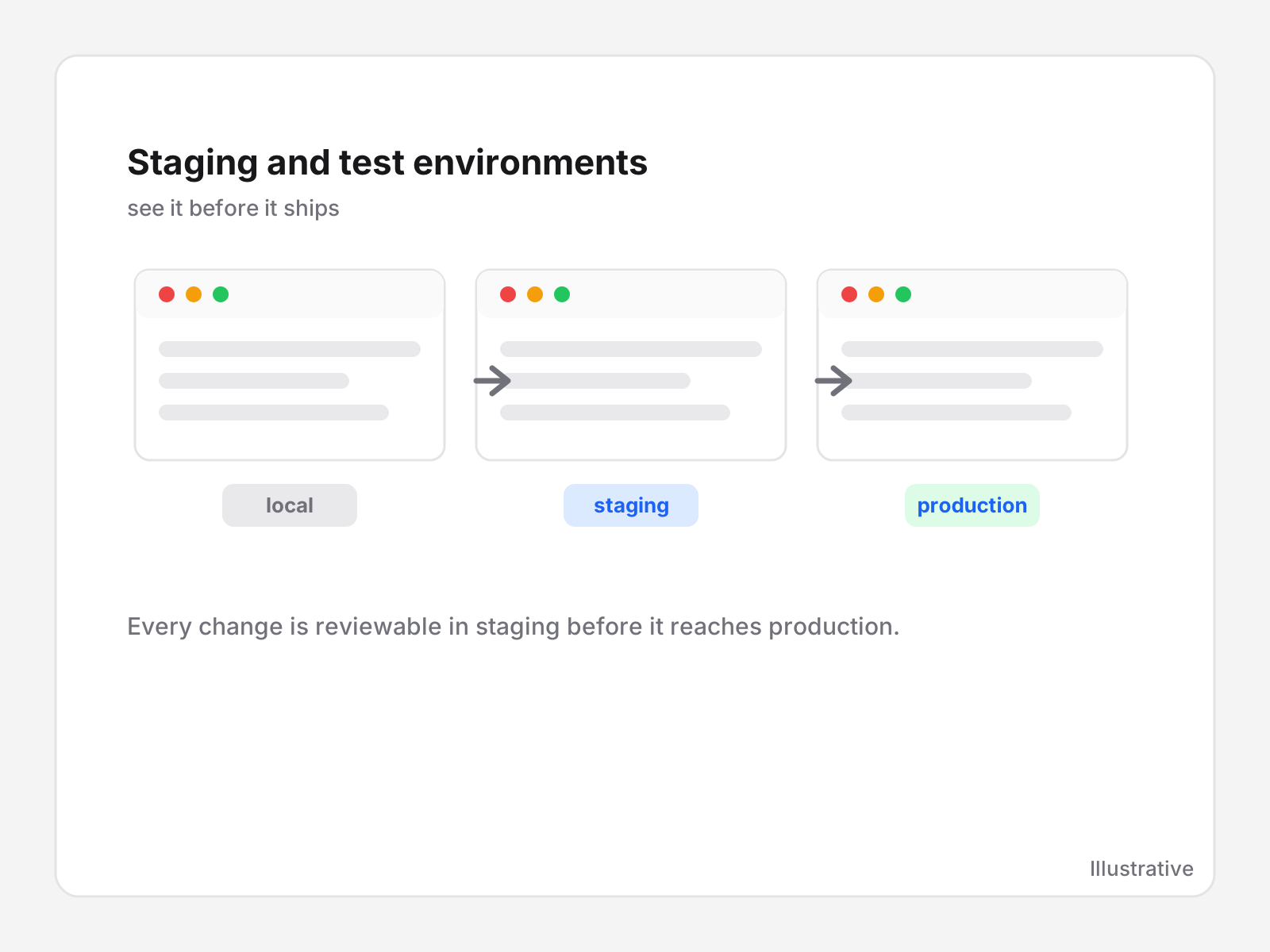
Your own test environment
You get a staging environment (with test payment cards where relevant) so you can QA features the same day we ship them.
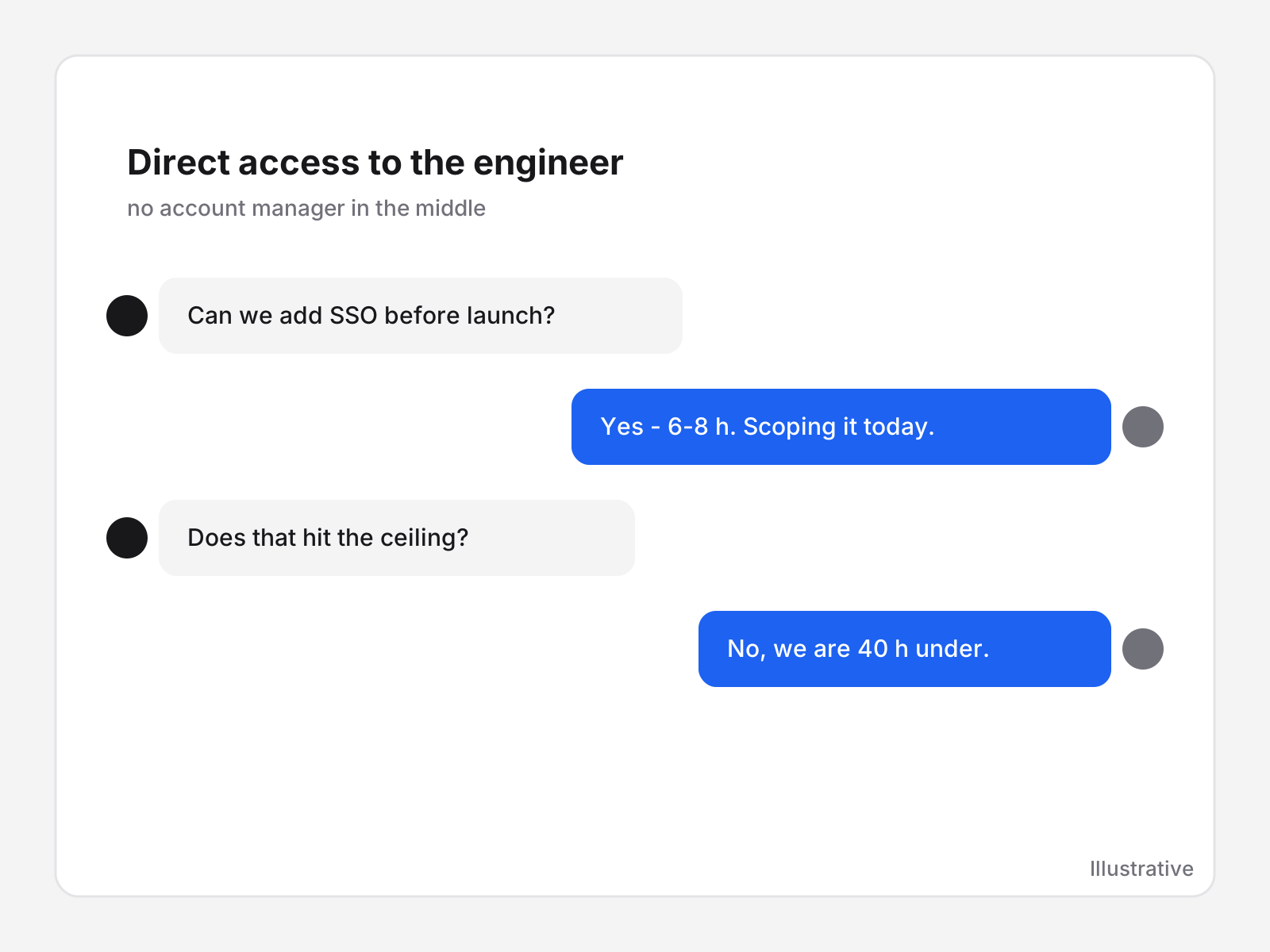
Direct Slack access
You talk to the engineers building your product, not an account manager relaying messages.
Clean estimation, every time
We define "done" in numbers: users, dates, a demoable scope. Risks in plain English, trade-offs shown. Unknowns become a short discovery sprint instead of open-ended hours.
Scoping with your delivery lead
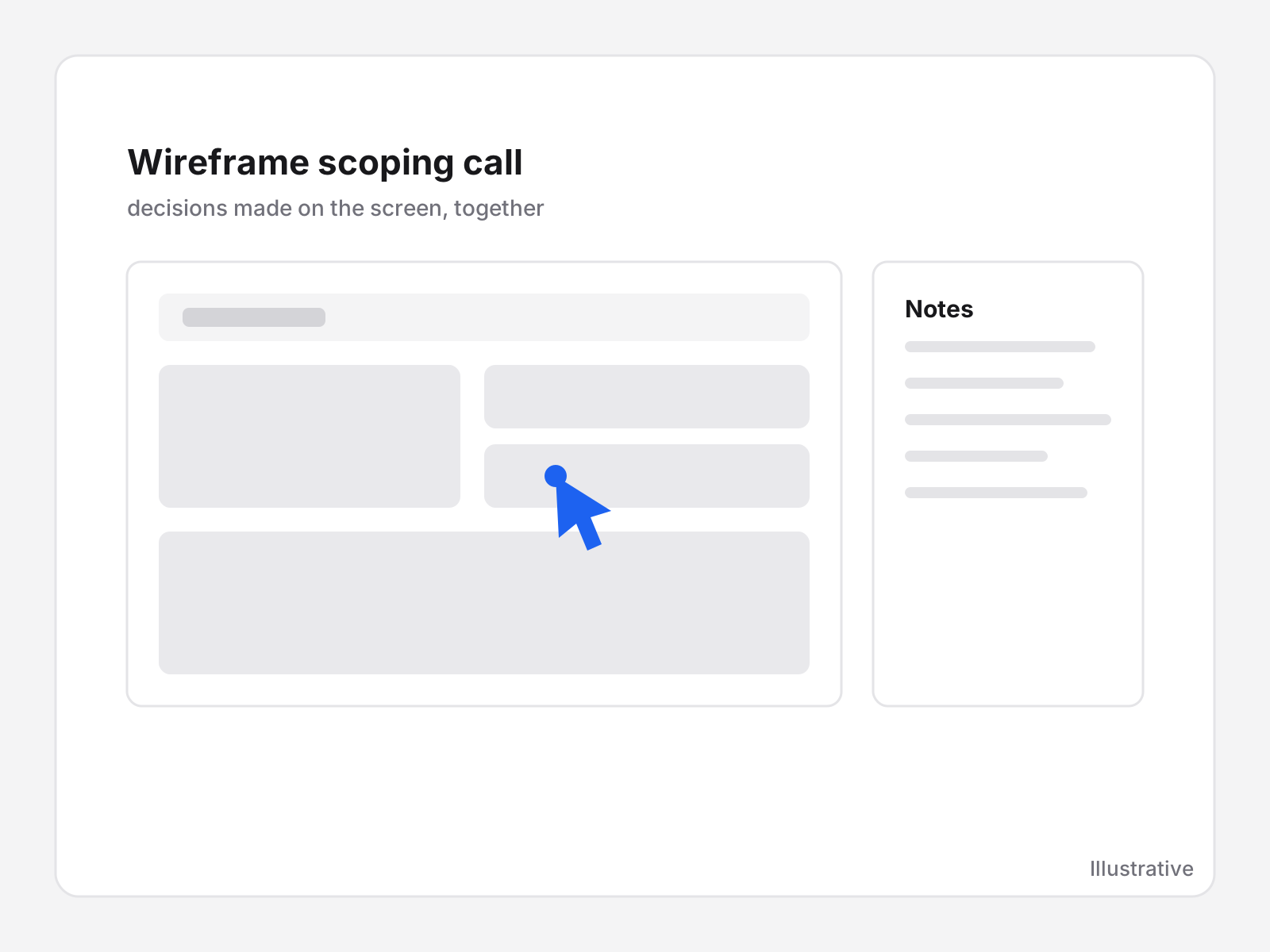
Your delivery lead walks your wireframes feature by feature before anything is priced, and flags what isn't worth building yet. Founders regularly leave scoping calls with a smaller, better plan.
Phase-gated estimates
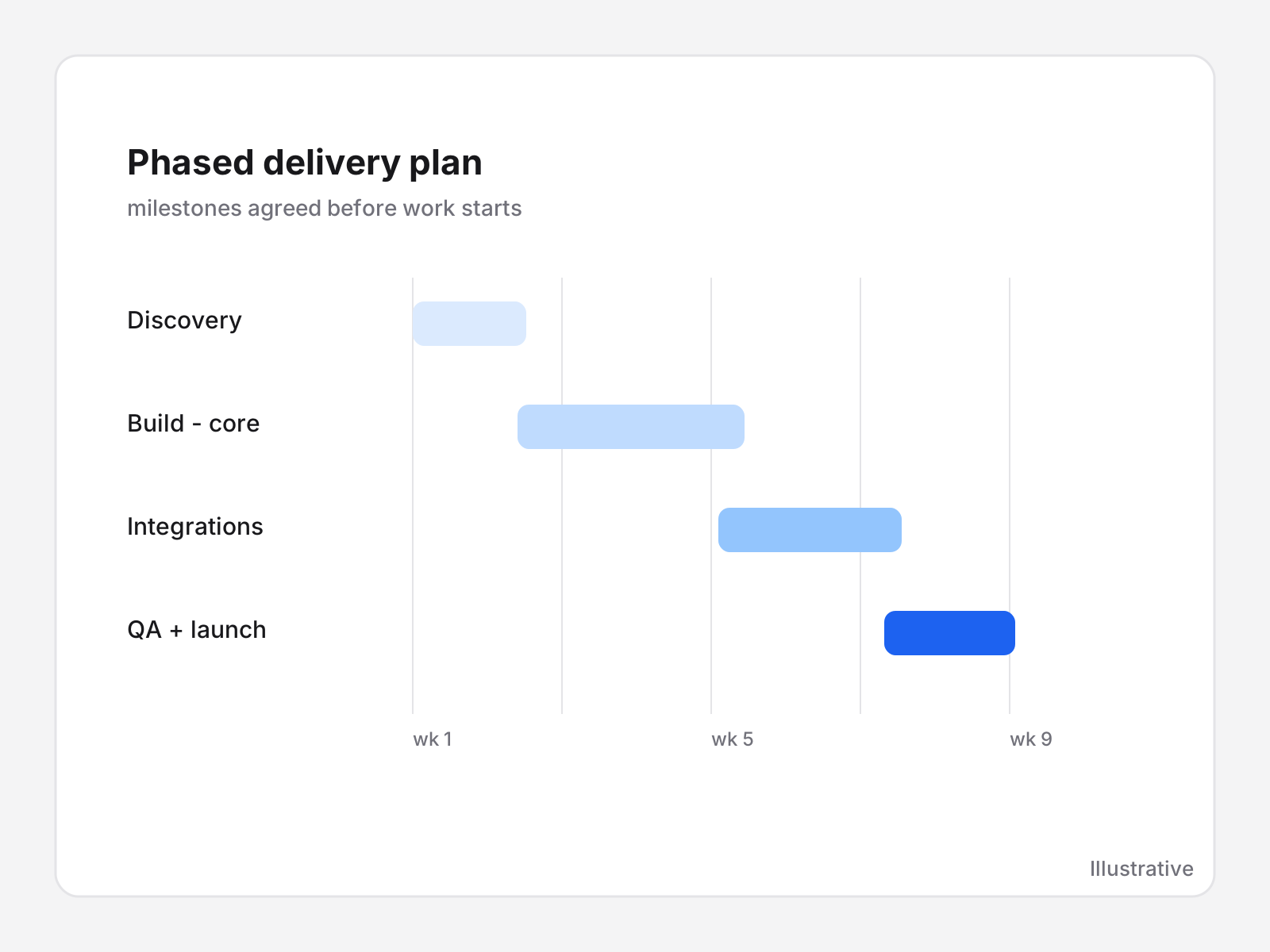
Only the phase ahead of you is estimated in full detail; later phases carry capped estimates that come down as decisions firm up. You never commit to hours nobody can honestly predict yet.
Contract terms: every project
Hour range with hard ceiling
capped
Overage beyond ceiling
on us
Payments tied to delivery
~6 milestones
2-week trial, not happy
don't pay
Contract & IP
US / California
Warranty, fixed-price / hourly
6 mo / 6–12 mo
Surprise invoices
$0.00
Sample: final invoice (milestone 6 of 6)
Milestone 6: delivery & approval
paid on approval
Hours used vs ceiling
under ceiling
Overage billed
$0.00
Repo & IP transfer
complete
6-month warranty
begins at delivery: in writing
Anything after this invoice
$0.00
Hardware + software, one team
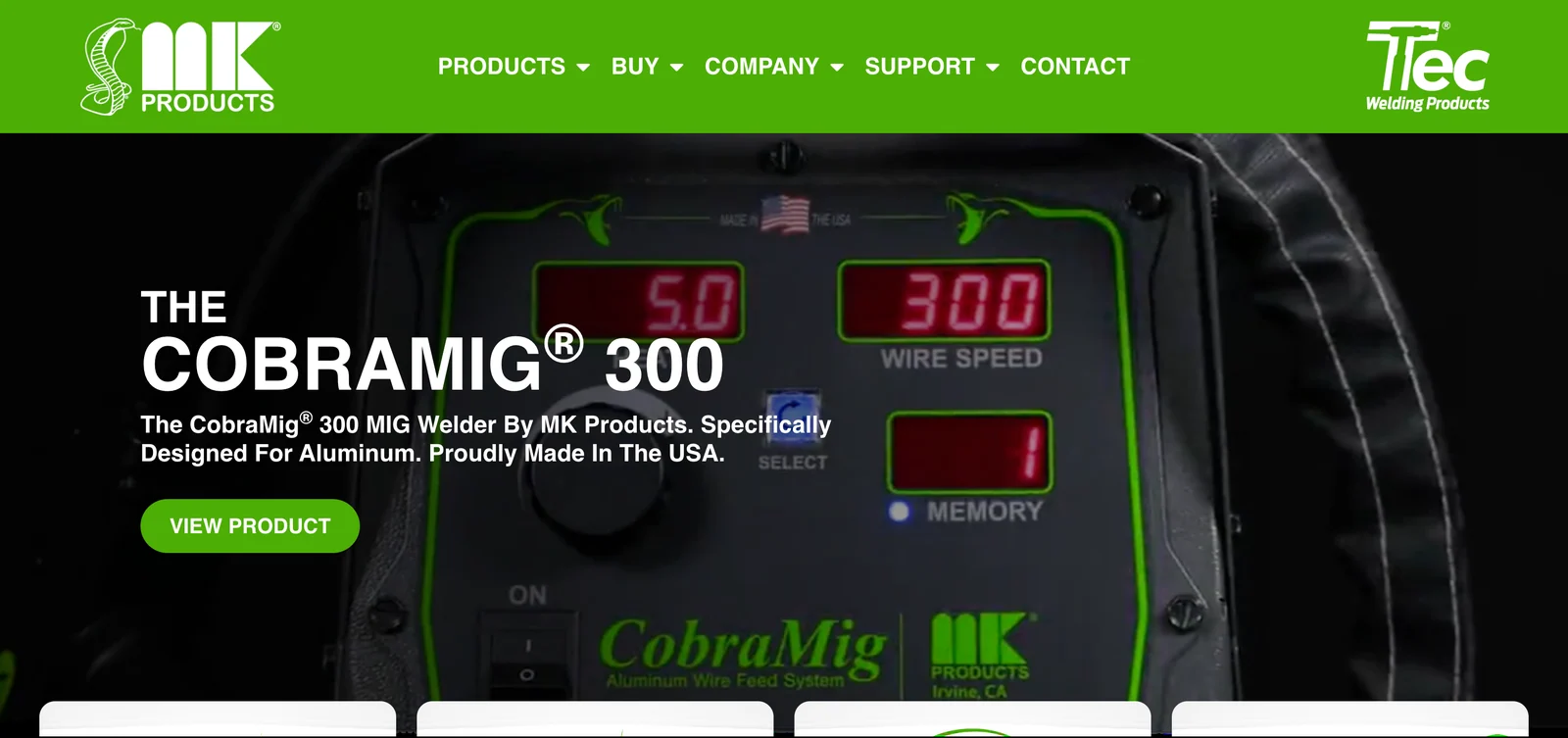
The product with which Horizon is helping us is an industrial manufacturing device... We had previous sets of contractors who each made an attempt to get real-time-like performance from the Android front end. They were abysmal failures. Horizon's Gorkem Bendin understands the tradeoffs required for real-time embedded processing and is able to write Android code that partitions the expensive computations outside the fast loops and allows our code to offer timely information to the users of our product. Highly recommended.
Andrew Ward · MK Products · ISO-certified welding-products manufacturer
60+
products shipped since 2019
5
businesses scaled from 0 to exit
5/5
on Clutch, across 9 verified reviews
0
team handoffs since 2019
Three co-founders who've built together for over a decade.
Serdar and Sinan have known each other since high school. Saif met Sinan on Reddit in 2018. In 2019, Serdar helped Sinan build Cuboh (YC S19), the startup Sinan later sold. The engineers who shipped Cuboh never left: they're the same people managing delivery on client projects today. We didn't assemble a team for this agency. We kept one that already worked.
Sinan Sari
YC alum with multiple exits and a CTO background. Sinan sets the technical bar, and is the reason many clients found us: founders he's worked with keep sending their friends.

Serdar Pehlivan
Serdar runs every engagement: project management, product management, and team tracking. When you hire us, he's accountable for your milestones, the same role he played building Cuboh.

Saif Akhtar
An ex-VC building startups since 2010. Saif covers everything non-technical: contracts, go-to-market support, launch planning, and product management.

At least two co-founders on every engagement.
Usually Serdar leading delivery alongside your assigned engineers, and Saif on business support. If you're looking for quick, cheap labor that says yes to everything, we're a bad fit. If you want a technical partner that will tell you when your approach is wrong, before you pay for it, we should talk.
Questions we hear on every first call.
What happens if the project goes over the estimated hours?
You don't pay more. The contract states an hour range, and the maximum is the most you'll ever pay for the agreed scope. New scope you add along the way is quoted separately before we build it.
Who owns the code?
You do. All work happens in your GitHub org, and your IP is assigned to you under a US contract.
Can you work with my existing codebase?
Usually, yes. We review it free first and tell you honestly whether we can work with it under our standard terms, or whether a rebuild makes more sense.
Where is the team located?
Management and leadership are in California. Engineers are onshore in the US or nearshore in Türkiye.
What does the warranty cover?
Any defect in code we delivered, for 6 months after delivery (6–12 months on hourly engagements). It doesn't cover scope changes or third-party services breaking their own APIs; we quote those separately.
How fast can we start?
Within 72 business hours of the intro call you get your written estimate, or the follow-up questions we need answered first. Once you sign, kickoff is usually the next day.
Do you use AI to write code?
Yes, deliberately. Senior engineers use AI to cut delivery time without cutting quality; it's why our fixed prices run about half our standard hourly equivalent. Client code only touches AI in secure environments.
See what your project would cost.
Tell us what you're building. After an intro call with our founders, you'll hear back within 72 business hours: a written scope with an hour range and a hard ceiling, or the questions we need answered first.