
Blog · Payments · 11-min read
Stripe Connect Multi-Vendor Marketplace Architecture: Escrow, Split Payouts & KYC
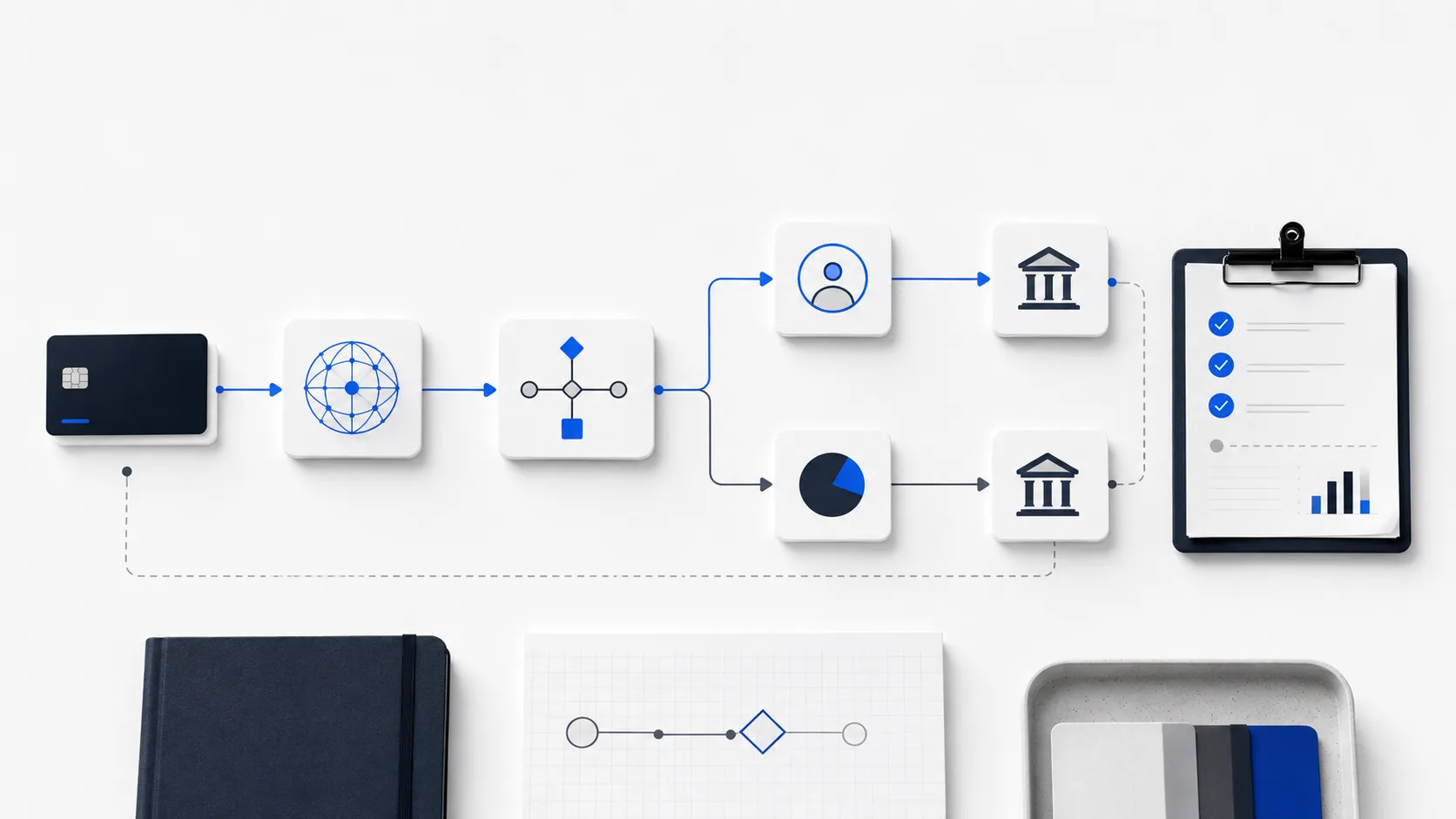
Payment architecture is the single highest-risk component of a two-sided marketplace. If your platform touches buyer funds directly before paying vendors without using a regulated payment facilitator split ledger, you trigger FinCEN money-transmitter licensing requirements in the US and PSD2 commercial agent rules in Europe. Stripe Connect eliminates that regulatory burden by segregating buyer charges, platform application fees, and connected vendor balances at the API level.
Before writing a single webhook, your engineering team must select the connected account model that matches your onboarding UX and dispute liability tolerance.

Architecture Criteria | Stripe Connect Express | Stripe Connect Custom | Stripe Connect Standard |
|---|---|---|---|
Onboarding UI | Co-branded Stripe-hosted form (mobile-optimized) | 100% white-label embedded API / custom UI | Redirects seller to full Stripe account signup |
Engineering Implementation | 2 -- 4 days (Account Links API) | 2 -- 3 weeks (custom KYC document & bank forms) | 1 -- 2 days (OAuth connection) |
Payout & Escrow Control | Full API control over transfer timing & splits | Full API control + custom reserve hold schedules | Seller controls payout schedule in their dashboard |
1099-K Tax Reporting | Managed via Stripe Express dashboard | Managed via API or Stripe Tax integration | Seller manages own tax reporting |
Best Marketplace Fit | Service, rental & B2C marketplaces (<$500k/mo GMV) | B2B procurement, healthcare & enterprise platforms | SaaS invoicing & storefront plugins |
Destination Charges work for single-seller instant payouts, but fail when a marketplace needs to hold funds until a service milestone is verified or when a single cart contains items from multiple sellers. For production marketplaces like Procura Sourcing and PebbleVault, we implement Separate Charges and Transfers tied together by a deterministic transfer_group identifier:
PaymentIntent with transfer_group: "ORDER_9482". Funds settle into your segregated platform balance.POST /v1/transfers referencing source_transaction (so transfers wait until buyer funds clear) and route 88% to Vendor A, 88% to Vendor B, while retaining the 12% platform fee.Most broken marketplace codebases we audit under our marketplace rescue practice fail on post-checkout edge cases. Every production Stripe Connect integration requires three defensive patterns:
/v1/transfers/{id}/reversals with refund_application_fee: true so the platform does not eat the processing loss.PaymentIntent with capture_method: "manual" to place a 7-day hold on the renter's card without incurring capture fees unless damage is reported.Stripe-Signature header and store processed event.id keys in Redis or PostgreSQL with a unique constraint so network retries never trigger duplicate vendor payouts.Read our companion guide on managing refunds and chargebacks with Stripe Connect or book a 15-minute payment architecture review below.
Use Stripe Connect Express for 90% of seed-stage marketplaces to launch KYC onboarding and 1099 tax reporting in 3 days. Choose Custom accounts only when you require a 100% white-labeled onboarding UI with zero redirects or custom multi-tiered reserve rules.
Using Separate Charges and Transfers, a platform can hold captured funds in its platform balance for up to 90 days (depending on regional Stripe settlement rules) before executing a Transfer to the connected vendor account upon milestone or delivery verification.
When issuing a partial refund on a Separate Charge and Transfer flow, call the Stripe Refund API on the buyer's PaymentIntent and simultaneously trigger a Transfer Reversal (`POST /v1/transfers/{id}/reversals`) to recover the proportional payout from the connected seller.
Tour live marketplaces, YC-backed MVPs, and architecture teardowns built by our senior team.
View Client Case Studies →See fixed-price sprint breakdowns, weekly milestone rates, and our 6-month code warranty.
Explore Pricing & Scopes →Direct 15-minute scoping call with Saif Akhtar (Head of Product & Engineering). No sales reps.
Book 15-Min Scoping Call →Use Stripe Connect Express for 90% of seed-stage marketplaces to launch KYC onboarding and 1099 tax reporting in 3 days. Choose Custom accounts only when you require a 100% white-labeled onboarding UI with zero redirects or custom multi-tiered reserve rules.
Using Separate Charges and Transfers, a platform can hold captured funds in its platform balance for up to 90 days (depending on regional Stripe settlement rules) before executing a Transfer to the connected vendor account upon milestone or delivery verification.
When issuing a partial refund on a Separate Charge and Transfer flow, call the Stripe Refund API on the buyer's PaymentIntent and simultaneously trigger a Transfer Reversal (`POST /v1/transfers/{id}/reversals`) to recover the proportional payout from the connected seller.
Tell us what you're building. After an intro call with our founders, you'll hear back within 72 business hours: a written scope with an hour range and a hard ceiling, or the questions we need answered first.