.webp)
What is Direct to Consumer (DTC)?
Learn how to launch and scale your direct to consumer (DTC) startup. Insights for founders navigating DTC strategy, marketing, and product development.
Starting a Direct to Consumer (DTC) brand sounds simple on paper: build a product, skip the middlemen, and sell straight to your customers. But any founder who’s gone down this road knows—it’s a different beast. With low barriers to entry but brutally high expectations, DTC is a game of margin math, ruthless focus, and deep customer insight. At Horizon Labs, we've worked with dozens of startups in the DTC space—from kids’ gear marketplaces like Kidsy to health and wellness products like Yura Health—and we’ve seen what works (and what burns cash fast).
So if you're thinking of building or scaling a DTC business, here’s what you need to know.
What Is Direct to Consumer (DTC)?
DTC vs. Traditional Retail
DTC is a distribution model where companies sell their products directly to consumers, typically through an online store, cutting out distributors, wholesalers, and retailers. Think Warby Parker, Glossier, or Allbirds.
In contrast, traditional retail relies on third-party retailers (e.g., Target, Walmart) to get products in front of customers. That adds markup, reduces control, and often limits brand-customer interaction.
Why Startups Love the DTC Model
Founders are drawn to DTC for a few compelling reasons:
- Full control over brand & customer experience
- Better data on buyer behavior and preferences
- Higher margins (if done right)
- Ability to test, iterate, and pivot quickly
But just because the barriers to entry are low doesn’t mean it’s easy. The very things that make DTC attractive—control, flexibility, speed—also make it risky if you’re not hyper-focused.
Challenges Most DTC Startups Underestimate
Paid Ads Are a Money Pit (Without a Moat)
Every DTC founder hits this wall: you launch, buy some Facebook/Instagram ads, get your first 100 customers… and then the CAC (customer acquisition cost) spikes like crazy. Why? Because everyone else is doing the same thing. Unless your product is incredibly unique or your brand has built-in virality, you’re stuck in a CPM arms race.
Logistics Will Make or Break You
Fulfillment, warehousing, returns, and customer support—all those unsexy backend ops? They will 100% determine whether your margins hold up. We've helped founders set up backend systems that scale (especially for perishable or regulated products), and it’s usually where they burn the most time early on.
Retention > Acquisition
Repeat purchase rate is your real north star. It’s what turns one-time ad spend into long-term LTV (lifetime value). If you don't have a product customers love and a clear way to bring them back, no amount of paid growth will save you.
How to Win in DTC as a Startup
Nail the Product Before Scaling
Don’t scale a leaky bucket. We’ve worked with startups who spent six figures on a Shopify site and Instagram ads… before realizing their product didn’t solve a real need. Our advice?
- Launch a simple MVP and test it in real customer hands.
- Use pre-orders or limited drops to test demand.
- Build your list before you build your warehouse.
Own Your Customer Relationship
Email is still king. SMS and loyalty programs are queen. You want to own the communication channel—not rent it through Meta or Google. Tools like Klaviyo, Postscript, and Loop make it easier than ever to engage, but the strategy still matters.
Build with Community in Mind
Great DTC brands feel like movements. Whether it’s lifestyle, sustainability, or self-care, your product should represent something bigger. People don’t just buy DTC—they buy into it.
Examples we love:
- Curtsy: Built a sustainable resale community for Gen Z.
- Kidsy: Made eco-friendly parenting accessible and affordable.
Margins Matter—Deeply
We’ve seen founders excited about 20% net margins. That’s not bad—but in DTC, you need to plan for operational overhead, shipping costs, and return rates that will eat into every dollar. Start from the end and work backward:
- What price point will work for your market?
- What’s your fully-loaded cost per unit?
- What’s your real CAC and payback period?
If those numbers don’t add up, rethink your packaging, supplier, or channel strategy.
Tech Stack for DTC Startups (Without Overbuilding)
We often get asked: “What tech stack should I use?” The answer depends on your stage. Here's our quick breakdown:
For Early-Stage MVPs (0–1):
- Shopify + basic theme (don’t overdesign)
- Klaviyo for email automation
- ShipStation for fulfillment
- Gorgias for customer support
For Scaling Startups (1–10):
- Custom headless storefront (if Shopify limits you)
- Segment + PostHog or Amplitude for analytics
- 3PL integrations for multi-location fulfillment
- Custom internal tools (we’ve built tons of these)
Founders often hire devs too early—or over-engineer when off-the-shelf tools will do. At Horizon Labs, we help startups stay lean until it makes sense to invest in a custom tech stack.
Go-to-Market Strategies That Actually Work
It’s easy to get distracted by TikTok virality or “influencer campaigns,” but what consistently works across the DTC clients we’ve helped?
- Founder-led storytelling: You are your brand’s best salesperson early on. Post, share, talk to customers.
- Partnership drops: Collaborate with aligned brands or influencers on a limited-edition product.
- Referral loops: Reward customers for sharing your brand. Not just discounts—make it feel like a club.
- UGC-first ads: Founder faces, testimonials, and behind-the-scenes content crush polished product videos.
- Press (but only when earned): Don’t chase PR. Chase customer love, and let press come to you.
What Investors Look For in DTC Startups
Yes, DTC can still raise money—but expectations are higher than ever. If you're thinking of pitching VCs, make sure you can answer:
- What’s your CAC:LTV ratio?
- How strong is your repeat purchase rate?
- Do you have a unique brand, product, or ops advantage?
- Are you profitable or breakeven on first purchase?
If not, focus on getting those unit economics right before fundraising.
The Rise of Omnichannel for DTC Startups
Why Being “Online-Only” Is No Longer Enough
DTC started online, but the most successful brands are now blending digital and physical retail. Opening a pop-up, doing in-person activations, or launching through curated retail shelves (e.g., Target incubators, small boutique partnerships) helps increase trust and reach.
Key Takeaway: DTC isn't anti-retail—it's pro-choice. Meet your customer wherever they already shop.
Sustainable DTC: A Strategic Advantage
Green Isn’t Just Marketing Anymore
Today’s consumers care about sustainability—and not just because it sounds good. Reducing packaging waste, using carbon-neutral shipping, and ethically sourcing materials can reduce churn and increase brand loyalty.
Founder Tip: Build sustainability into your unit economics from day one. Retrofitting later is harder and more expensive.
Subscription Models for DTC (But Use Caution)
When Subscriptions Work—And When They Don’t
Everyone wants recurring revenue—but forcing subscriptions on products that aren’t consumed regularly (or don’t build habit) leads to churn and negative reviews. When done right (think: Dollar Shave Club, BarkBox), they can 10x LTV.
Use subscriptions if:
- Consumption is regular (e.g., supplements, pet food)
- There’s a surprise/delight component (e.g., curated boxes)
- Customers have reasons to stick around (e.g., community, rewards)
Differentiation: What Actually Counts in DTC
Your Product Isn’t Unique. Your Story Might Be.
Too many founders think “we’re organic and hand-made” is a differentiator. It's not. But your founder story, values, and customer experience can set you apart. Build a brand with a clear why—not just a pretty logo.
What matters more:
- Community > commodity
- Values > value prop
- Support experience > shipping speed
Testing, Testing, Always Be Testing
Build a Testing Culture Early
Before scaling ads or redesigning your site, test everything:
- Hero images
- Product copy
- Checkout flow
- Pricing tiers
- Free shipping thresholds
At Horizon Labs, we often set up A/B testing tools during development so you’re collecting insights from day one—not scrambling post-launch.
Final Thoughts on DTC and Why Horizon Labs Can Help
The direct to consumer (DTC) space is crowded—but not dead. Founders who focus on product-market fit, operational excellence, and brand authenticity still win. At Horizon Labs, we’ve helped build, launch, and scale DTC startups across e-commerce, health, parenting, marketplaces, and beyond.
Whether you’re just validating an idea or looking to engineer a custom solution that scales, we’ve seen the pitfalls—and know how to help you avoid them. From MVP to production-ready platforms, we build fast, on budget, and with deep empathy for your customers.
Need a dev team that knows DTC inside and out? Reach out to us at info@horizon-labs.co or book a free consult at https://www.horizon-labs.co/contact. If we’re not the right team for your stage, we’re happy to refer you to trusted partners who’ve helped other founders win in DTC.
Frequently Asked Questions (FAQs) about Direct to Consumer (DTC):
Q: What is a Direct to Consumer (DTC) business model?
A: DTC means selling your product directly to customers without intermediaries like wholesalers or retailers. Most DTC brands use their own websites to reach buyers, allowing full control over customer experience, pricing, and data.
Q: Is DTC only for physical products?
A: No—while it's most common in physical goods (e.g., skincare, apparel), digital products, subscriptions, and even services can follow a DTC model if they’re sold directly to end users.
Q: How much money do I need to start a DTC brand?
A: It depends, but you can test a concept for under $5K with pre-orders, a simple Shopify site, and a small ad budget. Scaling profitably, though, takes more capital—especially for inventory and fulfillment.
Q: Do I need to be on Amazon or retail stores to succeed?
A: Not necessarily. Many DTC brands start without Amazon or retail. But once you build brand equity, expanding into omnichannel (e.g., Amazon, Target, pop-ups) can boost reach and credibility.
Q: How can I make my DTC brand stand out in a crowded market?
A: Focus on solving a specific problem for a specific audience. Then, craft a strong brand story and customer experience. Unique positioning—not just the product—drives loyalty.
Q: What are the biggest mistakes DTC founders make early on?
A: The top ones: overinvesting in paid ads too early, poor logistics planning, unclear brand messaging, and skipping customer research. MVP before scale is the way to go.
Q: What metrics matter most for a DTC startup?
A: CAC (customer acquisition cost), LTV (lifetime value), repeat purchase rate, conversion rate, and gross margin are key. Your payback period should be short if you're running paid growth.
Q: Should I offer free shipping from day one?
A: Only if your margins allow it. Free shipping boosts conversions, but if it eats your profits, it's not sustainable. Test different pricing models and consider thresholds (e.g., free shipping over $50).
Q: Can I outsource development for my DTC site?
A: Absolutely. Many DTC founders work with product agencies like Horizon Labs to build their site, backend, or custom features. Just make sure your partner understands your brand voice and customer needs.
Q: How do I build trust with first-time buyers?
A: Use clear product photos, transparent policies, reviews, and responsive support. Add social proof (e.g., UGC or press mentions) and offer guarantees to reduce friction.
Q: How do I validate my DTC product idea before investing heavily?
A: Start small—use landing pages, email waitlists, and pre-orders to test demand. Tools like Typeform, LemonStand, or even a Notion page with a Stripe link can work early on.
Q: Is influencer marketing still effective for DTC brands?
A: It can be—but micro-influencers and authentic UGC tend to perform better than big-budget endorsements. Prioritize creators who genuinely use or believe in your product.
Q: What platforms should I launch my DTC site on?
A: Shopify is the most common starting point. As you scale, you can go headless or use custom builds for more flexibility. Make sure your tech stack matches your stage—not your ego.
Q: How important is packaging in DTC?
A: Extremely. In DTC, packaging isn’t just about protection—it’s part of the brand experience. Unboxing moments can drive shares, loyalty, and even free marketing.
Q: Should I build a mobile app for my DTC brand?
A: Only if it adds real value beyond your site. If you're in wellness, fitness, or lifestyle (e.g., Arketa, Curtsy), an app can improve retention—but don’t build one just to look legit.
Q: What role does customer service play in a DTC business?
A: A huge one. Fast, helpful, and personal support builds trust and drives referrals. Many DTC brands turn their support team into part of their marketing engine.
Q: How do I handle returns without hurting my margins?
A: Build return policies that protect both the customer and your business. Use tools like Loop or Returnly, and factor return rates into your margin model early.
Q: Can I run a successful DTC brand without raising VC money?
A: Yes! Many founders bootstrap by starting with limited drops, high-margin products, and reinvesting profits. VC is optional—especially if you control CAC and retention.
Q: How do I know if my DTC brand has product-market fit?
A: Watch for organic growth signals: word-of-mouth, repeat purchases, low return rates, and unsolicited praise. If you’re pushing the product harder than the customers are pulling—it’s not quite there yet.
Q: How can I build a DTC brand that lasts?
A: Think beyond trend-chasing. Build around real customer needs, community, and long-term differentiation. Brands that survive treat DTC like a relationship—not a transaction.
Need Help Bringing Your DTC Vision to Life?
Building a Direct to Consumer (DTC) brand isn’t just about selling online—it’s about creating a meaningful relationship with your customers, backed by technology that scales. At Horizon Labs, we’ve partnered with startups across healthtech, marketplaces, and e-commerce to launch high-conversion MVPs, streamline logistics, and build custom tools that turn one-time buyers into lifelong fans.
Whether you’re testing an idea or scaling a seven-figure DTC operation, we can help you build faster, smarter, and with fewer mistakes. Reach out to us at info@horizon-labs.co or schedule a free consultation at https://www.horizon-labs.co/contact to see how we can support your DTC journey. And if your needs are outside our wheelhouse, we’ll connect you with trusted partners who’ve helped other founders win.
We're a California devshop, born out of Y Combinator S19, that's shipped products for SaaS, AI, healthtech, fintech, manufacturing/IoT, and marketplace companies. We do three things well: launch new products, clear engineering backlogs, and provide fractional engineering leadership and product management.
You get a senior onshore team in the US or a nearshore team in Turkey with US management, contracts with our US company that include clear milestones and deadlines, and a 6-month warranty on every line of code. If it breaks, we fix it for free. That's our American guarantee.
No scope creep and no surprise invoices: we quote an hour range in the contract, and the maximum is the most you'll ever pay for the agreed scope.
Need Developers?
We help companies build ideas into apps their customers will love (without the engineering headaches). US leadership with American & Turkish delivery teams you can trust.














For Startups & Founders
We've been founders ourselves and know how valuable the right communities, tools, and network can be, especially when bootstrapped. Here are a few that we recommend.
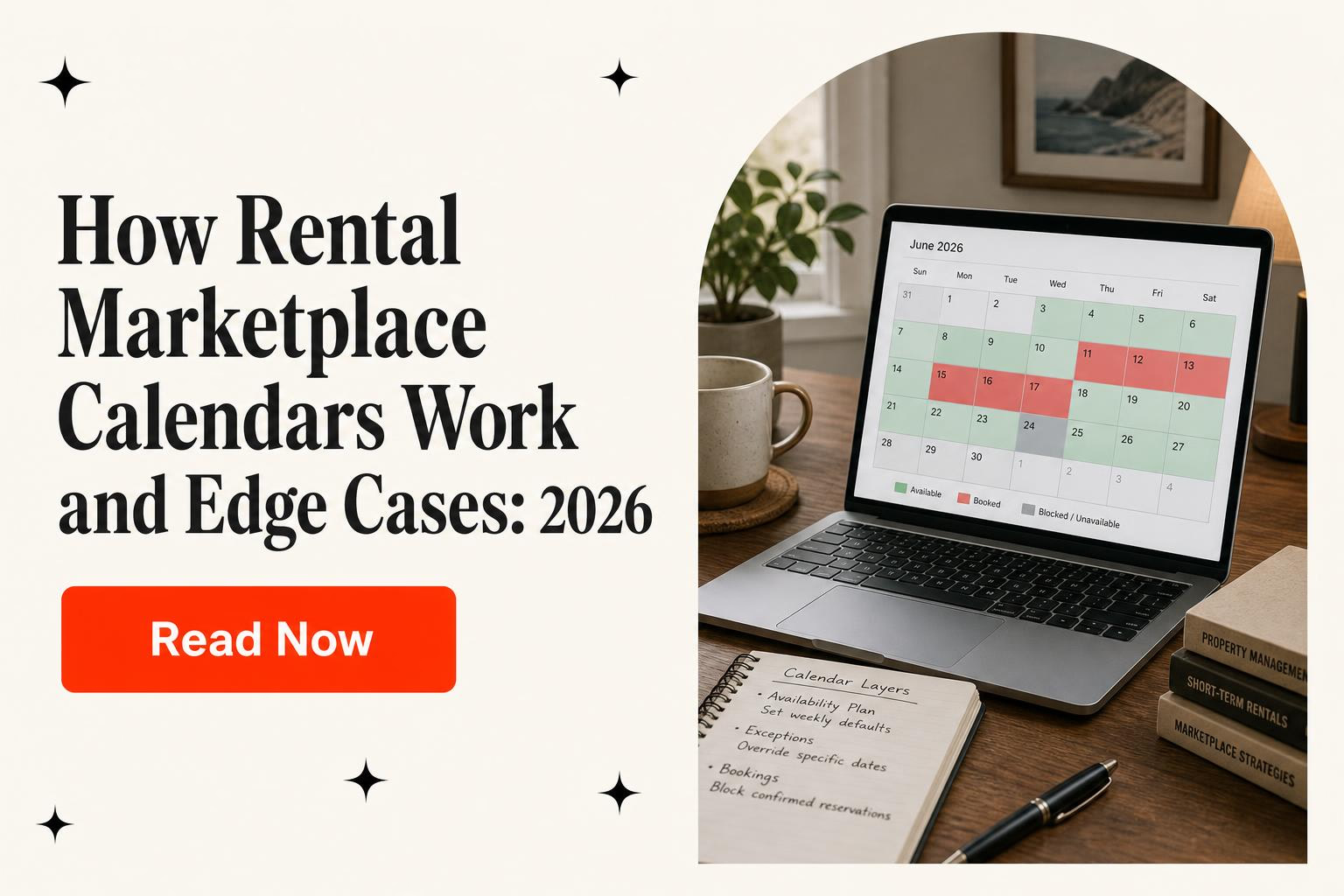
How Rental Marketplace Calendars Work and Edge Cases: 2026
How Rental Marketplace Calendars Work and Edge Cases: 3-layer model, booking units, buffers, sync, and timezones. Read the 2026 guide.
Read more
Compliance Requirements for Medical Device Software (2026)
Learn Compliance Requirements for Medical Device Software: IEC 62304, ISO 13485/14971, QMSR, and 524B. 2026 glossary of key terms—start here.
Read more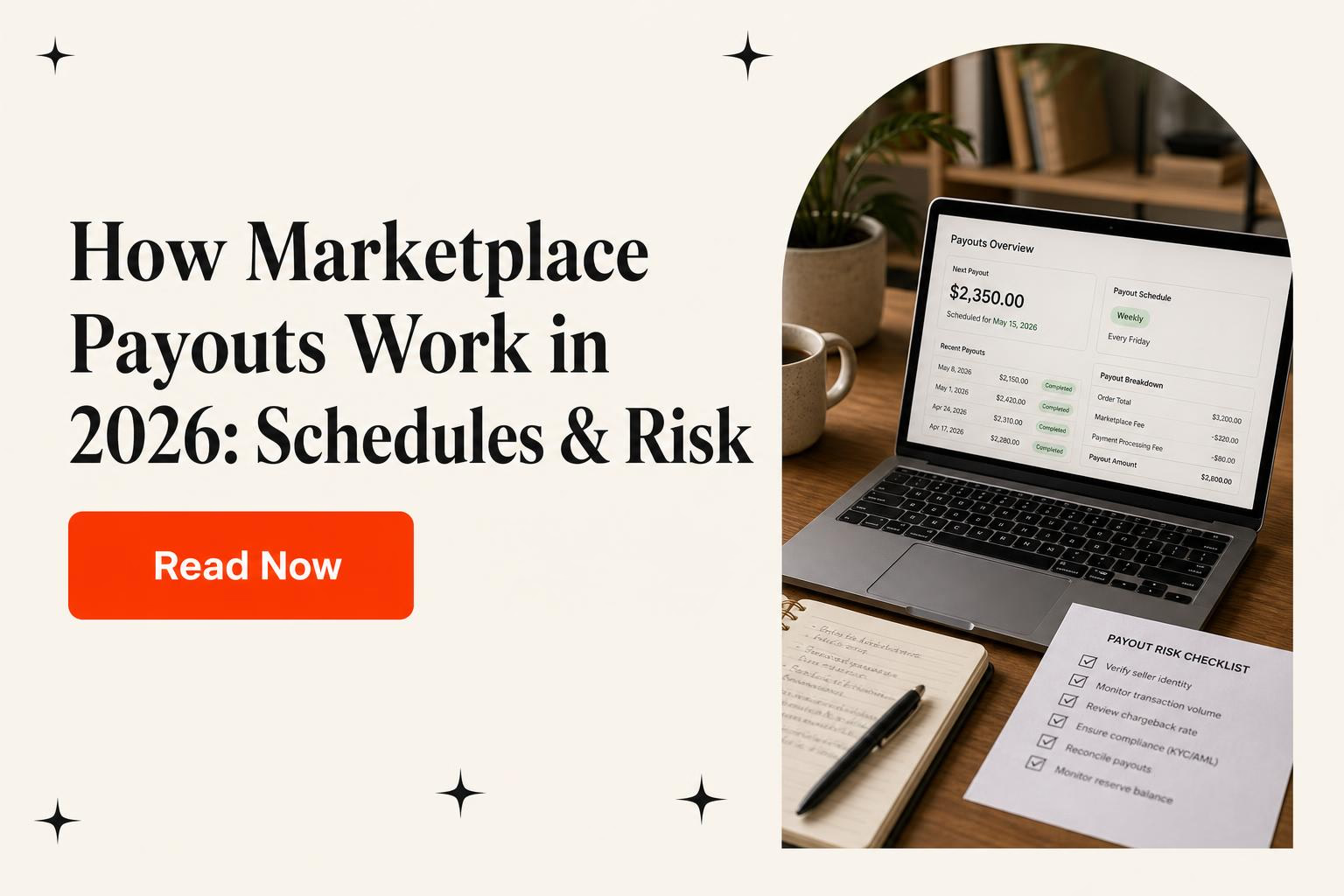
How Marketplace Payouts Work in 2026: Schedules & Risk
Learn how marketplace payouts work in 2026—from flow and schedules to compliance, risk, and providers. Get best practices and avoid costly pitfalls.
Read more
What is Mixpanel?
Learn how Mixpanel helps startups track user behavior to improve products and accelerate growth with clear data-driven insights.
Read more
How Tawk.to Can Boost Your Startup’s Customer Support Game
Learn how Tawk.to can benefit startups by enhancing customer support and engagement. Perfect for early-stage founders!
Read more
Grow Your Startup With Anthropic's AI-Powered Tools
Discover how Anthropic's cutting-edge AI tools can accelerate your startup's success. Learn about their benefits and see why they can be trusted by startups.
Read more
What is Data-Driven VC?
Learn what a data-driven VC means and how such investors can benefit your startup’s growth and fundraising journey.
Read more
What is Blockchain?
A beginner-friendly guide on blockchain for startup founders, covering key concepts, benefits, challenges, and how to leverage it effectively.
Read more
What is Cybersecurity?
Learn cybersecurity basics tailored for startup founders. Understand key risks, best practices, and how to protect your startup from tech threats.
Read more
What is Seedcamp?
Learn what Seedcamp is, how its European seed fund works, and how founders can use its capital, mentorship, and network to scale their companies.
Read more
What is AngelList?
AngelList is a prime platform connecting startup founders to investors, talent, and resources to accelerate early-stage growth.
Read more
What is 500 Startups?
Learn what 500 Startups (now 500 Global) is, how its accelerator and seed fund work, and when founders should consider it—plus tips for early-stage startups.
Read more